
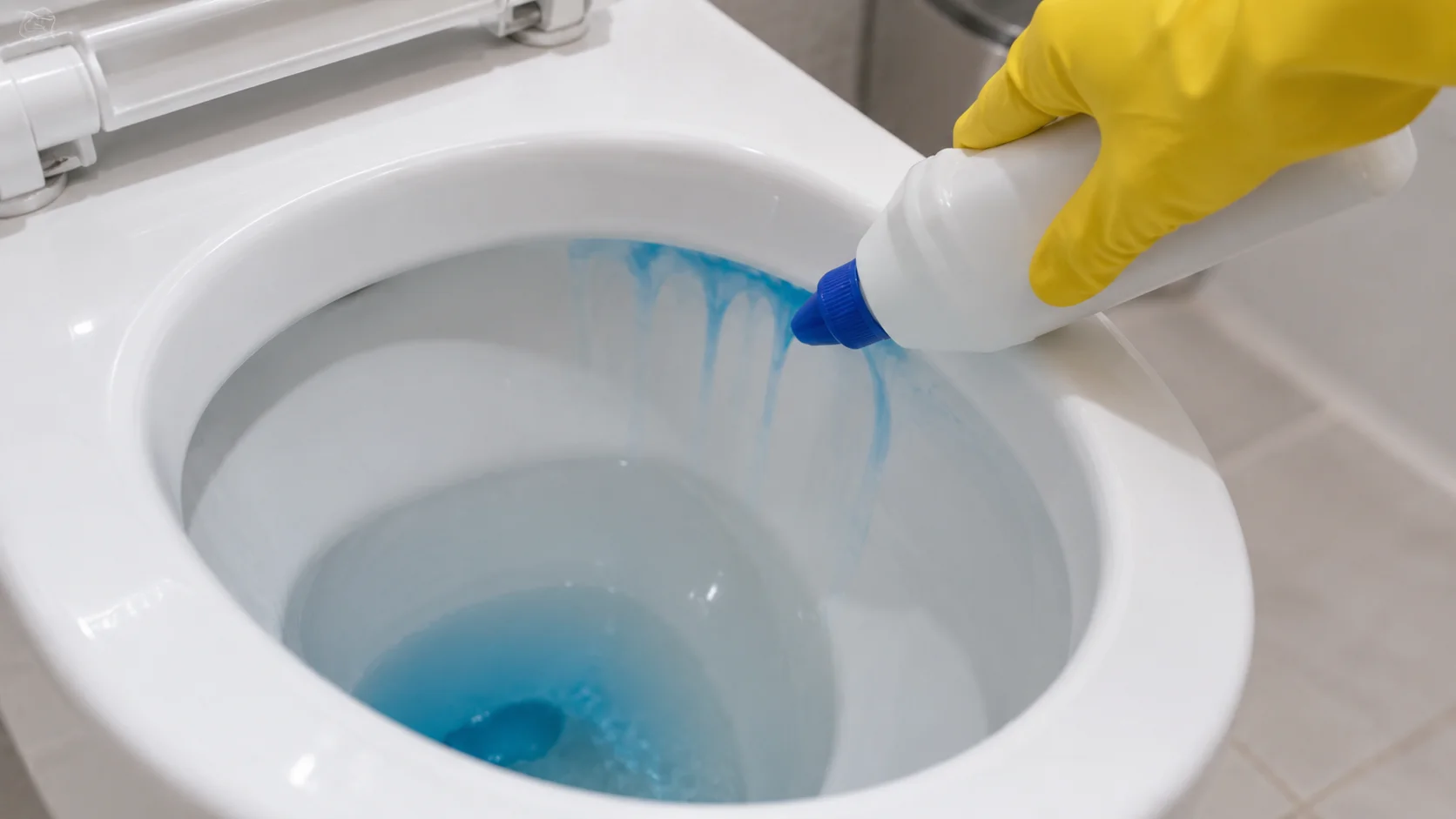
A toilet bowl cleaner is designed to remove stains, mineral deposits, odors, grime and, depending on the formulation, germs from the inside of a toilet bowl. Products range from traditional liquid and gel cleaners to foaming formulas, tablets, automatic cleaners and specialized acidic products for hard-water or rust buildup.
Choosing the right cleaner matters because different formulas perform different jobs. A bleach-based cleaner can help with stains and disinfection, while an acidic toilet cleaner is better suited to mineral deposits such as rust and hard-water scale. Most importantly, toilet cleaners should never be mixed with bleach or other household chemicals unless the product label specifically directs it. Poison Control warns that mixing acidic toilet cleaners with bleach can produce chlorine gas.
What Is Toilet Bowl Cleaner?
Toilet bowl cleaner is a specialized bathroom-cleaning product formulated for the hard, nonporous surfaces inside toilet bowls. Depending on the product, its ingredients may include detergents, acids, bleach, fragrances or other cleaning agents.
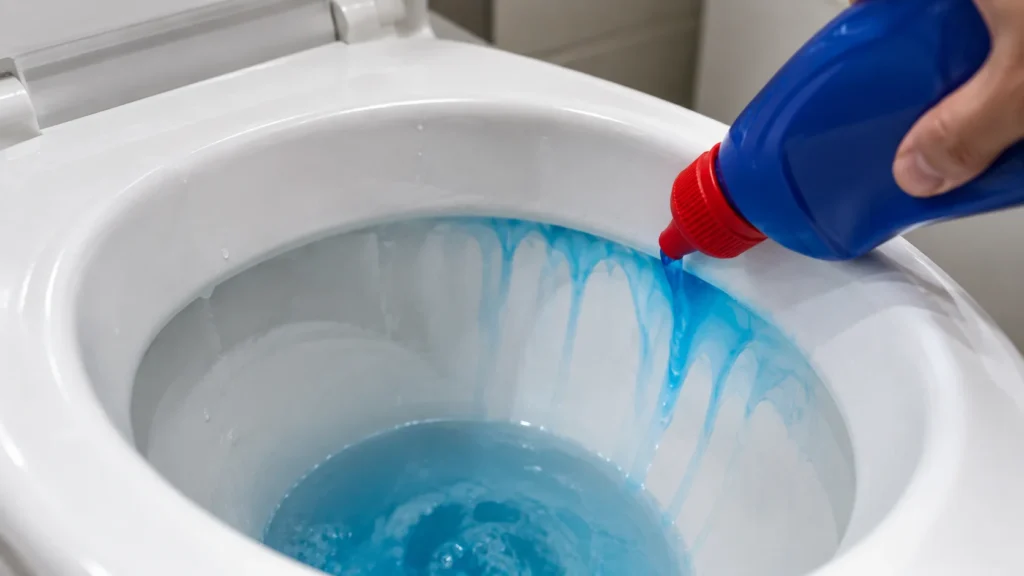
Regular toilet bowl cleaners can be substantially more hazardous than ordinary household detergents because some contain corrosive acids or alkaline ingredients. Poison Control notes that some toilet bowl cleaners can cause serious burns if swallowed or exposed directly to skin or eyes.
For that reason, the best toilet cleaner is not simply the strongest product available. It should be appropriate for the particular problem routine soil, hard-water buildup, rust, odors or sanitation and used exactly according to its label.
Types of Toilet Bowl Cleaners
There are several types of toilet bowl cleaners, and they are not interchangeable. Liquid and gel products are intended for direct application to the bowl, while automatic products continuously release cleaner during flushing.
Some products contain bleach and focus on whitening, deodorizing and disinfecting. Others use acidic chemistry specifically to dissolve mineral deposits, rust and hard-water residue. Zep, for example, describes its acidic toilet bowl cleaner as a product for rust, stains and hard-water residue.
Foaming cleaners and tablets offer different application methods, while natural or DIY formulas generally use milder household ingredients but may not provide the same performance as a purpose-designed commercial cleaner.
15 Common Toilet Cleaner Types and Their Uses
Understanding the major categories makes it easier to choose a product without relying only on brand names.
- Liquid toilet bowl cleaner Traditional formula applied directly inside the bowl.
- Gel toilet bowl cleaner Thicker formulas can cling to vertical surfaces.
- Bleach toilet cleaner Designed for stain removal, whitening and, where labeled, disinfection.
- Acidic toilet bowl cleaner Useful for mineral deposits, rust and hard-water buildup.
- Foaming toilet cleaner Produces foam to cover portions of the bowl.
- Toilet bowl cleaning tablets Solid products that dissolve during cleaning.
- Automatic toilet cleaner Releases cleaning ingredients during flushing.
- Toilet tank cleaner Designed specifically for the tank rather than automatically being suitable for the bowl.
- Septic-safe toilet cleaner Products specifically labeled as compatible with septic systems.
- Natural toilet bowl cleaner Uses ingredients marketed as milder or plant-derived.
- DIY toilet bowl cleaner Homemade mixtures using household ingredients.
- Hard-water cleaner Targets mineral scale and deposits.
- Rust remover Specialized for iron and rust discoloration.
- Foaming toilet bomb A dissolving tablet that creates foam in the bowl.
- Toilet cleaner with disinfecting claims Formulated and labeled for specified sanitation or disinfection uses.
Always read the product label because two products in the same category can have different ingredients, contact times and safety instructions.
How to Use Toilet Bowl Cleaner Safely
Before using any toilet cleaner, read the label and make sure the bathroom has adequate ventilation. Wear gloves when recommended and avoid splashing cleaner onto skin or into the eyes.
A typical manual cleaning process begins by flushing the toilet, applying the cleaner under and around the rim, brushing the bowl, allowing the product to remain for the label-specified time, and flushing. For example, Clorox’s bleach gel instructions specify flushing first, applying the product around the rim, scrubbing, allowing it to sit for 10 minutes and then flushing.
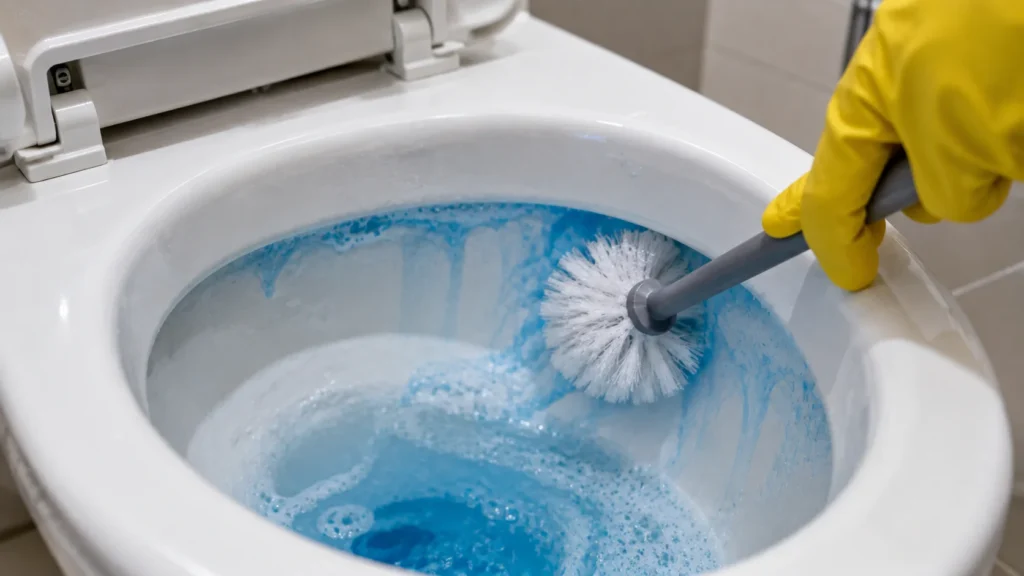
Lysol’s current toilet bowl cleaner instructions similarly call for flushing first, coating the bowl, scrubbing and following the specified contact time when sanitation or disinfection is desired.
What Is the Best Toilet Bowl Cleaner?
There is no single cleaner that is best for every toilet or every stain. The appropriate choice depends on what you are trying to remove.
For ordinary organic grime and routine cleaning, a standard toilet bowl cleaner may be sufficient. For hard-water stains, limescale and rust, an acidic formulation can be more appropriate because acids dissolve mineral deposits. Zep specifically markets its acidic formula for rust, stains and hard-water residue.
For products making disinfecting claims, check the label and follow the required contact time. Lysol, for example, specifies different contact times for sanitizing and disinfecting its toilet bowl product.
Bleach vs. Acidic Toilet Bowl Cleaner
Bleach and acidic cleaners perform different jobs, so substituting one for another can produce disappointing results.
Bleach-based toilet cleaners are commonly used for whitening, deodorizing and disinfecting. Clorox states that its bleach toilet bowl cleaner destroys stains and deodorizes, but also notes that bleach products are not particularly effective against rust stains.

Acidic toilet cleaners are designed to attack mineral deposits such as limescale and rust. Clorox specifically recommends an acidic Lime & Rust Destroyer for hard-water and rust buildup rather than relying on bleach.
Never combine the two. Acid plus bleach can produce hazardous chlorine gas.
Lysol, Clorox and Zep Toilet Bowl Cleaners
Several well-known brands offer different types of toilet cleaners, but their products should be evaluated by formula and intended use, not simply by brand popularity.
Lysol toilet bowl cleaner currently offers a thick formula designed to clean above and below the waterline, with specific instructions for sanitizing and disinfecting.
Clorox toilet bowl cleaner includes bleach-based gel products designed to destroy stains and deodorize. Clorox also sells separate products for hard-water and rust buildup, demonstrating why the stain type matters.
Zep acidic toilet bowl cleaner is formulated around acidic cleaning chemistry and is marketed specifically for rust, stains and hard-water residue.
These products should not be mixed or casually substituted for one another.
Toilet Bowl Cleaner Tablets and Automatic Cleaners
Automatic toilet cleaners are designed to reduce the amount of manual cleaning needed between deeper cleanings. They may come as tablets, gels or hanging products that release cleaning ingredients during flushing.
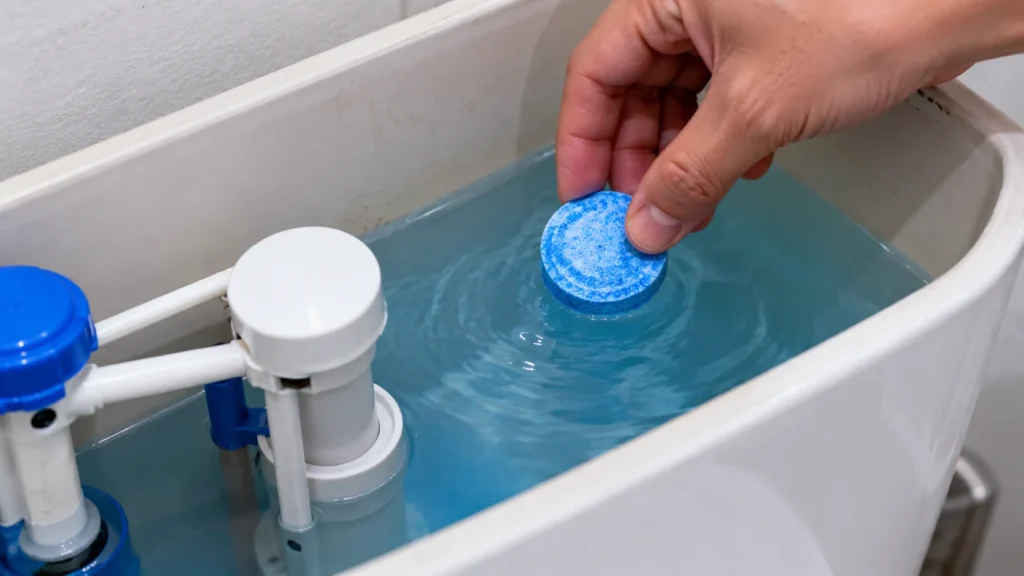
Poison Control explains that automatic cleaners can contain detergents and other ingredients and may be placed in the tank or inside the bowl depending on the product design.
Tank tablets deserve particular attention. Follow the manufacturer’s installation instructions instead of dropping an unfamiliar tablet into the tank. Clorox, for example, provides specific instructions for placing its automatic tablet into an emptied tank and warns against combining bleach-based tablets with incompatible cleaners.
Automatic products are convenient, but they should not be treated as a replacement for periodic manual inspection and cleaning.
Best Toilet Bowl Cleaner for Hard Water Stains
Hard-water stains usually appear as white, gray, yellow or reddish mineral deposits around the waterline and other areas of the bowl.
An acidic toilet bowl cleaner is generally the more appropriate category for mineral scale and rust because acidic formulas are designed to dissolve these deposits. Zep specifically describes its acidic cleaner as targeting rust, stains and hard-water residue.
Bleach may disinfect and whiten the bowl, but it is not the right chemistry for dissolving mineral buildup. Clorox explicitly says its bleach product is not particularly effective on rust stains and recommends an acidic product instead.
Jump into Other Related Article
- How to Remove Food Stains from Clothes | Grease, Oil, Sauce, Baby Food & More
- How to Clean Kitchen Cabinets | A Complete Guide for Wood, Grease, Painted & Laminate Cabinets
- How to Remove Stains from Carpet | Complete Guide for Coffee, Pet, Wine, Urine & More
Natural and DIY Toilet Bowl Cleaner
DIY toilet-cleaning recipes often use ingredients such as vinegar and baking soda. Although these household ingredients can have cleaning uses, they should not automatically be considered equivalent to a commercial toilet bowl cleaner.
The biggest safety issue is mixing ingredients without understanding their chemistry. In particular, vinegar or another acid must never be combined with bleach because acid can cause chlorine gas to form.
If you prefer a non-commercial approach, use one simple, compatible method at a time and never combine household cleaners merely because each one is considered useful on its own.
Toilet Tank Cleaner vs. Toilet Bowl Cleaner
A toilet tank and toilet bowl are different surfaces and should not automatically receive the same product.
The bowl is designed to handle products specifically labeled for toilet-bowl cleaning. The tank contains components such as valves, seals and other mechanisms that can be affected by certain chemicals.
Clorox provides separate guidance for cleaning toilet tanks and notes that some products intended for the bowl should not simply be used interchangeably in the tank.
If you want to use a toilet tank cleaner, choose one specifically labeled for tanks and follow its directions.
Is Toilet Bowl Cleaner Septic Safe?
“Septic safe” is a product-specific claim, not something that should be assumed for every toilet cleaner.
Some manufacturers explicitly state that their products are suitable for septic systems when used as directed. For example, Clorox states that its Clinging Bleach Gel is safe for septic systems when used according to directions.

However, septic-system owners should still follow the product label and avoid excessive or inappropriate chemical use. Clorox also notes that frequent bleach use may disrupt the natural bacteria needed for proper septic function.
Toilet Cleaner Safety | What You Should Never Mix
Toilet cleaners can contain corrosive acids, bleach or other reactive ingredients. Poison Control classifies toilet bowl cleaners among household products capable of causing chemical burns.
The most important safety rule is simple:
Never mix toilet bowl cleaner with bleach, ammonia, vinegar or another cleaning product unless the manufacturer explicitly instructs you to do so.
Mixing an acidic toilet cleaner with bleach can release chlorine gas, while bleach and ammonia can produce chloramine gas. Both can cause respiratory irritation and potentially serious injury.
If incompatible products are accidentally mixed and fumes develop, leave the area and move to fresh air. Poison Control recommends ventilating the area and seeking expert help if symptoms occur.
Common Toilet Bowl Cleaner Mistakes
Using the right cleaner is only part of safe toilet maintenance. Avoid these common mistakes:
- Mixing bleach and toilet cleaner
- Mixing vinegar with bleach
- Mixing ammonia-containing products with bleach
- Using an acidic cleaner with a bleach tablet already in the system
- Ignoring the product label
- Using more cleaner than instructed
- Allowing children to access cleaning products
- Leaving the toilet accessible to pets during treatment
- Using a bowl cleaner in the tank without checking the label
- Skipping ventilation
- Touching strong cleaners with bare hands
- Getting cleaner into the eyes
- Using an inappropriate cleaner for rust or mineral buildup
- Assuming every toilet cleaner is septic safe
- Transferring cleaner into an unmarked container
Poison Control recommends keeping toilet cleaners away from children, avoiding skin and eye contact, using gloves and washing hands after handling them.
Conclusion
A toilet bowl cleaner is most effective when you select it according to the job. Standard liquid or gel cleaners can handle routine bowl cleaning, bleach-based formulas can address certain stains and sanitation needs, while acidic cleaners are specifically useful for hard-water and rust buildup. Automatic tablets and foaming products offer different ways to maintain the bowl between manual cleanings.
Safety is more important than choosing the strongest formula. Always follow the label, ventilate the bathroom, protect your skin and eyes, and never mix toilet bowl cleaner with bleach or other incompatible household chemicals. Acidic toilet cleaners and bleach can produce dangerous chlorine gas when combined.
What is the best toilet bowl cleaner?
The appropriate cleaner depends on the problem. A standard cleaner can handle routine soil, while acidic formulas are better suited to hard-water and rust deposits. Bleach-based cleaners may be useful for stains, deodorizing and labeled disinfection.
What is the best toilet bowl cleaner for hard water?
An acidic toilet bowl cleaner is generally the appropriate category for hard-water mineral deposits and rust. Zep specifically describes its acidic toilet bowl cleaner as targeting rust, stains and hard-water residue.
Can you mix toilet bowl cleaner and bleach?
No. Do not mix them. Acidic toilet bowl cleaners combined with bleach can release chlorine gas, which can cause coughing, eye and throat irritation and breathing problems.
Is Lysol toilet bowl cleaner safe for septic systems?
Check the exact product label because formulations vary. Do not assume that every Lysol or other brand’s toilet product has identical septic-system compatibility.
Is Clorox toilet bowl cleaner septic safe?
Clorox states that its Clinging Bleach Gel and Toilet Bowl Cleaner with Bleach are safe for septic systems when used as directed.
What is an acidic toilet bowl cleaner used for?
Acidic toilet cleaners are particularly useful for mineral deposits, hard-water buildup and rust stains. Zep markets its acidic toilet bowl cleaner specifically for these problems.
Are toilet bowl cleaner tablets safe?
They can be used when installed and handled according to their product instructions. Automatic cleaners can contain detergents and other chemicals, so they should be kept away from children and pets and should not be combined with incompatible cleaning products.
Can I use toilet bowl cleaner in the toilet tank?
Only if the product is specifically labeled for tank use. Bowl cleaners and tank-cleaning products are not automatically interchangeable. Follow the toilet and cleaner manufacturer’s instructions.
Can vinegar and baking soda clean a toilet bowl?
They can be used separately for some household cleaning purposes, but they are not necessarily a substitute for a purpose-designed toilet cleaner. Most importantly, never combine vinegar or another acid with bleach because dangerous chlorine gas can form.
What should I do if I accidentally mix toilet cleaner and bleach?
Leave the area and get into fresh air immediately. Ventilate the area if it can be done safely without remaining exposed. If you develop coughing, breathing difficulty, eye irritation or other symptoms, seek medical or poison-control assistance.