How to Remove Food Stains from Clothes. A meal can leave behind grease, oil, tomato sauce, curry, chocolate, coffee, juice, baby food, food coloring, or a combination of several stain types. The right treatment depends on what caused the stain, how long it has been there, and what the garment is made from.
The most important rule is to treat the stain before drying the clothing. Remove excess food first, pretreat the affected area, wash according to the care label, and check the result before using a heated dryer. OxiClean and Tide both recommend prompt pretreatment for many food and grease stains.
What Is the Best Way to Remove Food Stains from Clothes?
The best general method is to remove as much food as possible before applying a cleaner. Scrape away thick or dried food with a dull utensil, then blot liquid or greasy residue rather than rubbing it deeper into the fabric.
For washable clothing, a suitable laundry detergent or stain pretreatment can then be applied before washing. OxiClean recommends checking the garment care label, testing products on an inconspicuous area, pretreating the stain, and washing according to the manufacturer’s recommended temperature.
Different food stains need different approaches. Grease and oil need attention to their oily component, while protein-based foods such as egg and dairy can require different treatment. UGA Cooperative Extension specifically warns that hot water can set an egg stain.
15-Step Food Stain Removal Method
Use this basic routine for most washable clothing, then adjust it according to the particular food and fabric.
- Check the garment care label before treating the stain.
- Remove excess food with a spoon or dull knife.
- Blot liquid spills with a clean cloth or paper towel.
- Avoid vigorous rubbing that can spread the stain.
- Identify the type of food stain before choosing a treatment.
- Test the cleaning product on an inconspicuous area.
- Apply a suitable pretreatment to the stained area.
- Gently work the product into the fabric when the product directions permit.
- Allow the pretreatment to work for the recommended time.
- Rinse or wash according to the product instructions.
- Use the warmest water permitted by the garment label.
- Use the normal laundry detergent appropriate for the garment.
- Inspect the stain before drying.
- Repeat treatment if a visible mark remains.
- Air-dry the garment until you know the stain is gone.
For commercial stain removers, always follow the specific label because application times, fabric restrictions, and washing instructions vary.
How to Get Food Stains Out of Clothes
Fresh food stains are usually easier to manage than old, dried stains. Begin by removing solid food without pushing it farther into the fibers. For a liquid stain, blot from the outside toward the center to limit spreading.
Next, apply an appropriate laundry stain remover or detergent. OxiClean’s general food-stain guidance covers common stains such as juice, berries, wine, chocolate, coffee, BBQ sauce and other food and drink spills.
After treatment, wash the garment according to its care label. Do not automatically choose the hottest possible water because some fabrics and dyes have specific temperature limitations.
How to Remove Food Grease and Oil Stains from Clothes
Greasy foods can be particularly stubborn because oils and grease are hydrophobic and can cling to fabric fibers rather than rinsing away easily with water.
For a fresh grease stain, first remove excess food and oil. Tide recommends rinsing the affected area when possible, gently working dish soap into a grease stain, rinsing, and then pretreating with laundry detergent before washing.
For older food grease stains, a dedicated stain pretreatment may be useful. OxiClean recommends pretreatment followed by washing at the warmest temperature the fabric can safely accept.
Do not put the garment into a heated dryer while the grease mark is still visible. Heat can contribute to setting some stains.
How to Remove Old Food Stains from Clothes
Old food stains can be harder because they may have dried into the fibers or been exposed to heat during an earlier wash or drying cycle. OxiClean explains that stains can become set when exposed to heat, including when stained clothing is placed in a dryer before the stain has been removed.
For washable clothing, pretreat the old stain with a suitable product and allow the recommended treatment time. Some products provide a soaking option for particularly stubborn stains, followed by normal washing.
If the stain remains after washing, repeat the treatment rather than immediately applying more heat. Very old stains may not disappear completely, especially if the original food contained dyes or if the fabric itself has been permanently discolored.
How to Remove Food Stains from White Clothes
White clothing makes food stains especially visible, but stronger cleaning is not always the safest choice. Start by removing the food and pretreating the stain with a product suitable for washable whites.
For food and grease stains, OxiClean provides separate guidance for washable white clothing and recommends following the garment label and product instructions.
Avoid chlorine bleach unless the garment’s care instructions specifically allow it. A stain remover that is safe for washable whites can be a better option when the label permits it.
How to Remove Food Stains from Colored Clothes
Colored clothing requires extra attention to colorfastness. Always test a new stain-removal product in an inconspicuous location before treating a visible area.
OxiClean specifically recommends testing its stain-removal products first and notes that certain products should not be used on wool, silk, leather, or dry-clean-only fabrics.
If the garment is brightly dyed, vintage, or especially valuable, use the manufacturer’s cleaning instructions rather than experimenting with strong household chemicals.
How to Remove Baby Food Stains from Clothes
Baby food can contain fruit, vegetables, oils, dairy, proteins, and brightly colored ingredients, so the appropriate treatment depends on what is actually in the food.
Remove excess baby food first and rinse or blot according to the garment and stain type. For washable clothing, pretreat the stain and launder according to the care label.
OxiClean specifically includes baby stains among the types of tough clothing stains for which pretreatment and soaking can be useful.
For old baby food stains, avoid drying the garment until you have checked whether the stain has disappeared.
How to Remove Indian Food, Curry and Turmeric Stains from Clothes
Indian food can leave particularly noticeable stains because dishes may contain oil, tomato, turmeric, chili, spices and other strongly colored ingredients. A curry stain may therefore require treatment for both the greasy and colored components.
First scrape away excess food and blot the area. Then use a stain treatment appropriate for the garment and wash according to its care label.
For turmeric or strongly pigmented stains, avoid immediately applying random household chemicals. Test any stain remover first because aggressive treatment can alter the garment’s original dye as well as the food stain.
How to Remove Food Coloring Stains from Clothes
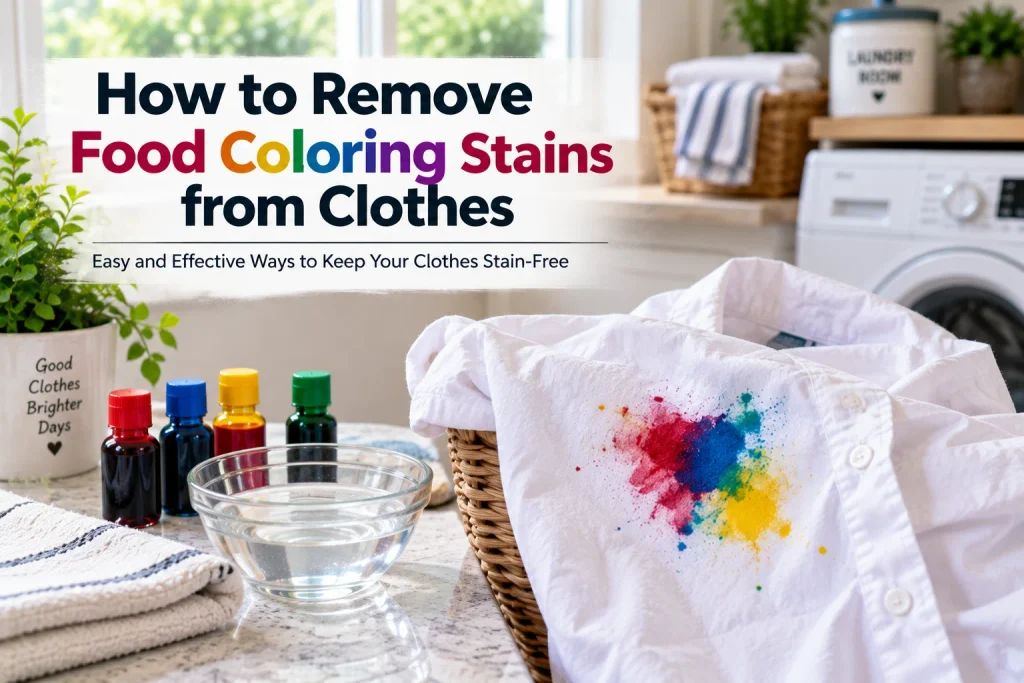
Food coloring can behave differently from greasy food because the primary problem may be a concentrated dye or pigment. Remove excess coloring without spreading it, then use a laundry stain remover appropriate for the garment.
OxiClean’s food-and-drink stain guidance includes brightly colored juice and berry stains, with pretreatment followed by washing according to the fabric’s care instructions.
For stubborn food coloring, repeated gentle treatment may be safer than using a highly concentrated household chemical. If the fabric itself has been permanently dyed, complete removal may not be possible.
How to Remove Food Stains from Delicate Fabrics
Cashmere, silk, wool and other delicate fabrics should not be treated like ordinary cotton T-shirts. Check the care label before applying water, detergent, stain remover or heat.
Some commercial stain removers specifically exclude wool, silk, leather and dry-clean-only garments.
If the item is labeled dry clean only, follow that instruction. For an expensive cashmere sweater, silk garment, vintage clothing or other valuable textile, professional cleaning is generally preferable to experimenting with a strong home treatment.
How to Remove Food Stains from White Shirts
A white shirt can usually be treated using the same basic sequence: remove food, pretreat, wash and inspect before drying. Pay special attention to collars, cuffs and areas where oily food may have transferred.
If the stain is grease-based, treat the oily component before washing. If it is coffee, tea, tomato sauce, berry juice or another strongly colored food, use a stain treatment appropriate for that type of discoloration.
Never assume that repeated hot washing will make the shirt cleaner. The care label should determine the maximum safe washing temperature.
How to Remove Food Stains from Tablecloths
Tablecloths can accumulate food grease, sauces, wine, coffee and other stains during meals. Remove solid food first, blot liquid spills, and pretreat before laundering.
For grease-heavy foods such as mayonnaise, butter, creamy sauces and salad dressing, the oily component can make the stain more resistant to an ordinary wash. UGA Cooperative Extension provides specific treatment guidance for oil-based foods including butter, cheese, cream, mayonnaise and peanut butter.
If the tablecloth is white, confirm that any whitening product is compatible with its fiber and care instructions before using it.
How to Remove Food Stains from Carpet, Walls and Other Surfaces
The keyword how to remove food stains also applies to surfaces outside clothing, but the cleaning method changes significantly.
For carpet, remove solid food first, blot liquids, and use a carpet-safe cleaner rather than automatically applying laundry products. For walls, test the cleaner on an inconspicuous area because paint can react differently to moisture and chemicals.
For plastic containers, silicone and stainless steel, remove excess food and wash with a suitable dishwashing detergent. UGA’s cleaning guidance for several hard surfaces recommends removing excess material, washing with warm sudsy water, rinsing with clean water and drying the surface.
For marble and other stones, use a method specifically appropriate for that stone because acidic or abrasive cleaners can damage some surfaces.
How to Remove Food Stains from Plastic Containers and Tupperware
Food containers can hold onto tomato, curry, oil and other colored residues. Start by removing leftover food and washing the container with warm water and dishwashing detergent.
For stubborn greasy residue, allow the detergent solution time to loosen the film before rinsing. Avoid abrasive tools that could scratch plastic because scratches can make future cleaning more difficult.
If a red or yellow color remains after washing, determine whether it is actual food residue or staining of the plastic itself. Persistent discoloration may not disappear completely through ordinary washing.
How to Remove Food Stains from Walls and Countertops
For painted walls, begin with the least aggressive approach: a soft damp cloth and a small amount of appropriate mild detergent if the paint finish allows it.
For marble countertops, do not assume that vinegar or another acidic household cleaner is safe. Stone surfaces have specific care requirements, and the wrong chemical can etch or dull the surface.
For stainless steel, wipe in the direction of the existing finish when possible, then rinse and dry to minimize streaking.
Common Mistakes When Removing Food Stains
Avoid these mistakes when trying to remove food stains from clothes:
- Rubbing immediately: This can spread the food deeper into the fibers.
- Using hot water on egg stains: UGA specifically warns that hot water can set egg.
- Drying before checking the stain: Heat can make some stains more difficult to remove.
- Ignoring the care label: The garment’s instructions should determine treatment limits.
- Skipping a colorfastness test: New products should be tested first.
- Using too much stain remover: More product does not automatically mean better cleaning.
- Scrubbing delicate fabrics: Friction can damage fibers.
- Using chlorine bleach unnecessarily: It may damage some fabrics and dyes.
- Treating grease like an ordinary water-based stain: Oil requires appropriate pretreatment.
- Using a carpet cleaner on clothing: Products are formulated for particular surfaces.
- Mixing cleaning chemicals: Avoid potentially hazardous chemical reactions.
- Treating silk or wool with a product that excludes those fibers: Always check the label.
- Leaving cleaning products on longer than instructed: Follow the manufacturer’s directions.
- Assuming every old stain is removable: Some discoloration may be permanent.
- Ignoring professional cleaning when appropriate: Valuable or dry-clean-only garments need specialized care.
Conclusion
Knowing how to remove food stains from clothes starts with identifying the type of stain and treating it before it has time to set. Remove excess food, blot instead of aggressively rubbing, pretreat with a suitable product, wash according to the care label, and inspect the garment before drying. Grease and oil stains may need a different approach from protein-based foods or strongly colored ingredients such as turmeric and food coloring.
For old, stubborn or set-in stains, patience is usually safer than aggressive scrubbing or stronger chemicals. Always test a new treatment first, follow the garment manufacturer’s instructions, and use professional cleaning for valuable or dry-clean-only fabrics when necessary.
How do you remove food stains from clothes?
Remove excess food, blot the area, pretreat with a suitable laundry stain remover or detergent, and wash according to the garment care label. Check the stain before putting the garment in the dryer.
How do you get grease stains out of clothes?
Remove excess grease, gently apply an appropriate dish soap or laundry detergent, rinse or pretreat as directed, and wash according to the care label. Tide recommends pretreating grease stains before the normal wash.
How do you remove old food stains from clothes?
Pretreat the old stain with a suitable product and follow its recommended treatment time before washing. Some set-in stains may need repeated treatment, particularly if they have previously been exposed to dryer heat.