
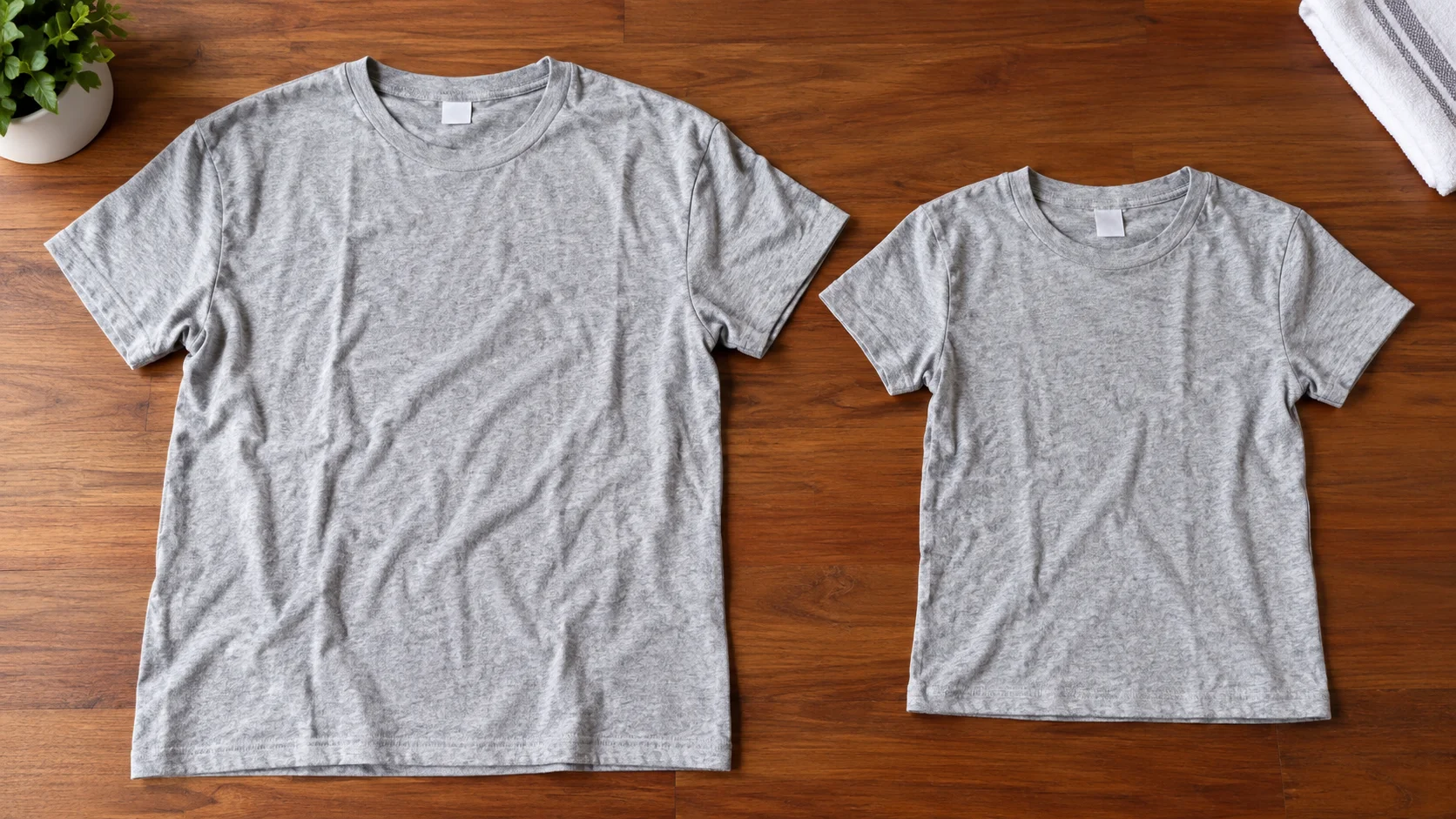
If a garment is slightly too large, you may be wondering how to shrink clothes without ruining them. Clothing can shrink when heat, moisture, and mechanical agitation cause fibers or fabric structures to change. Natural fibers such as cotton, wool, and some linen generally respond more readily than synthetic fabrics such as polyester and nylon.
The important point is that shrinking is not perfectly predictable. The final amount depends on the fiber, fabric construction, previous processing, and care instructions. A controlled approach is better than simply using maximum heat, particularly with wool, silk, or garments that are expensive or difficult to replace.
What Makes Clothes Shrink?
Clothes can change size because textile fibers and fabrics are not completely dimensionally fixed. Cotton, linen, and some other fibers can relax during washing and drying after having been stretched or stressed during manufacturing. Heat and agitation can accelerate this process.
Wool behaves differently. Its microscopic scales can interlock when wool is exposed to moisture, heat, and agitation, causing felting and potentially permanent shrinkage. Woolmark explains that untreated wool can felt when its fibers interlock during wet agitation.
Synthetic fibers generally resist ordinary washing-related shrinkage more than many natural fibers, although high heat can still affect some garments. This is why identifying the fabric before attempting to shrink it is essential.
Jump into Other Related Article
- How to Remove Peanut Butter Stains | Easy Ways to Clean Clothes, Fabric & More
- How to Remove Coffee Stains | Easy Methods for Clothes, Teeth, Carpet & More
- How to Remove Stains from Carpet | Complete Guide for Coffee, Pet, Wine, Urine & More
How to Shrink Clothes Safely
The safest approach is to shrink a garment gradually rather than trying to force maximum shrinkage in one cycle. First check the care label and identify the fabric. If the item is labeled pre-shrunk, the amount of additional shrinkage may be limited. Whirlpool specifically recommends checking the fabric type and avoiding pre-shrunk garments when intentional shrinkage is the goal.
For suitable cotton garments, a warm or hot wash followed by controlled drying can produce some shrinkage. However, the result varies by garment, so inspect the item periodically rather than assuming a specific percentage of shrinkage.
15-Step Method to Intentionally Shrink Clothes
Use this process for a suitable washable garment when the care label permits it:
- Check the garment’s fiber content.
- Read the care label carefully.
- Check whether the garment is marked pre-shrunk.
- Decide how much smaller you actually want it.
- Turn the garment inside out.
- Wash it separately if color bleeding is a concern.
- Select a warm or hot wash only when the fabric permits it.
- Use the washer’s normal cycle when appropriate.
- Remove the garment after washing and inspect its size.
- Use a dryer if additional controlled shrinkage is desired.
- Choose a heat setting appropriate to the fabric.
- Check the garment periodically during drying.
- Stop the heat once the desired size is reached.
- Remove the garment and allow it to cool.
- Air-dry afterward to help prevent additional unintended shrinkage.
Whirlpool recommends monitoring garments during intentional shrinking because excessive heat can shrink clothing more than intended. It suggests checking garments periodically during a high-heat drying process.
How to Shrink Clothes in the Wash
Washing can contribute to shrinkage, particularly with natural fibers. For cotton, a warm or hot wash may encourage the fibers to relax and reduce the garment’s dimensions. Whirlpool notes that cotton shirts and denim can shrink more when exposed to warm or hot washing followed by high-heat drying.
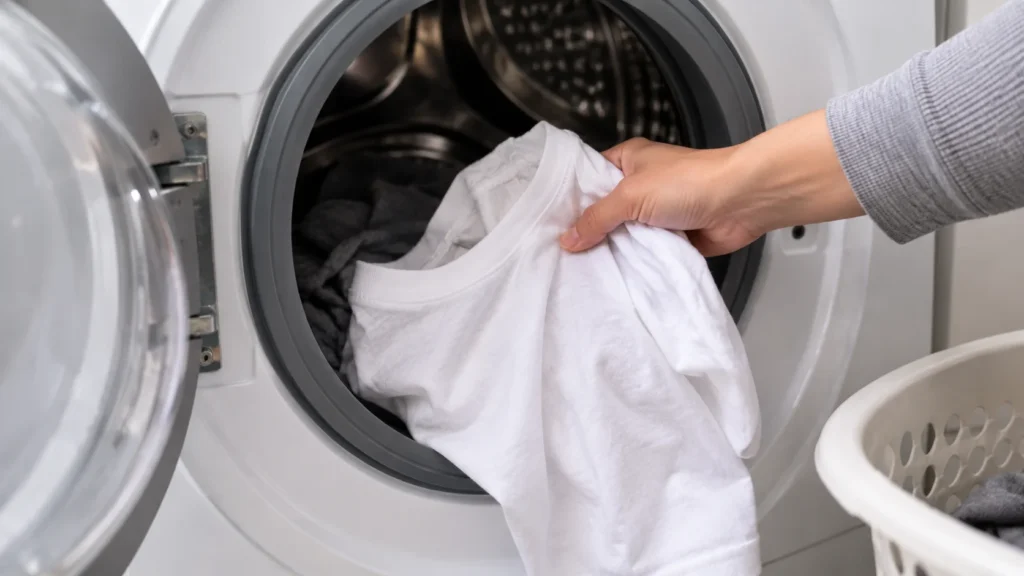
However, washing alone may not produce as much shrinkage as a combined wash-and-dry process. If you only want a slight size reduction, washing first and measuring the garment before using the dryer gives you more control.
Always remember that the same temperature can produce different results in different garments. Construction, previous washing, blends, and finishing treatments all matter.
How to Shrink Clothes in the Dryer
A dryer can increase shrinkage because heat and tumbling expose the fabric to both temperature and mechanical movement. This is particularly useful when trying to shrink suitable cotton garments, but it also creates a higher risk of overshrinking.
For better control, check the garment every few minutes instead of leaving it in a high-heat cycle for the entire duration. Once it reaches the desired size, remove it from the heat and let it cool.
Whirlpool also warns that overdrying can contribute to shrinkage, which is why moisture-sensing or shorter drying cycles can help when the goal is to avoid accidental shrinkage.
How to Shrink Cotton Clothes and Shirts
Cotton is one of the most commonly discussed fabrics when it comes to intentional shrinking. Depending on how the garment was manufactured and finished, cotton can respond to warm or hot washing and drying.
If a cotton shirt is only slightly too large, start with a warm wash and inspect it before applying additional dryer heat. If more shrinkage is needed and the care label permits it, controlled dryer heat can provide additional dimensional change.
Do not assume every cotton shirt will shrink dramatically. Pre-shrunk or specially finished cotton may change much less than untreated cotton.
How to Shrink Cotton Clothes in the Washer and Dryer
For a washable cotton garment that you intentionally want smaller, the washer-and-dryer approach is straightforward:
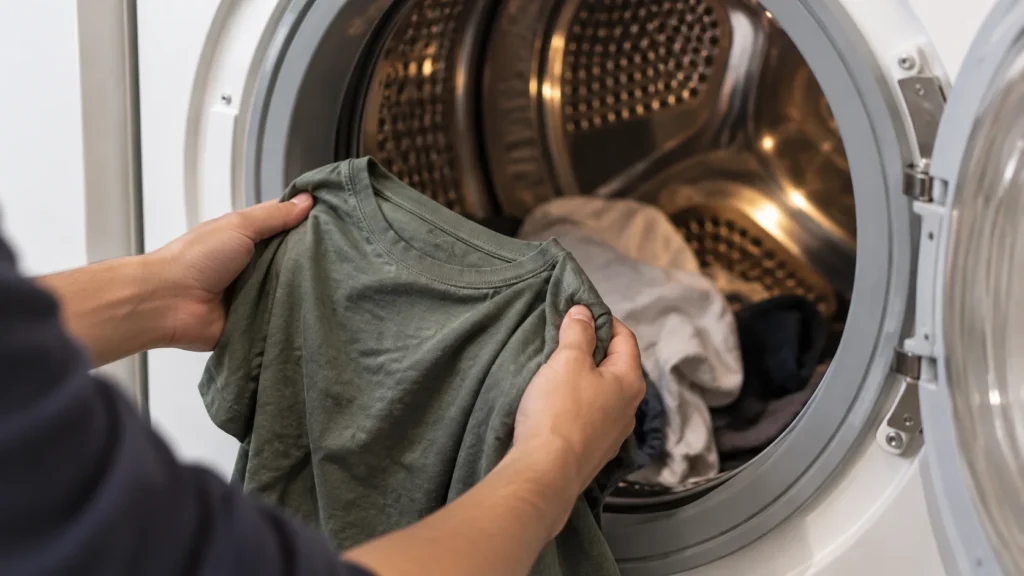
Wash → inspect → dry with controlled heat → inspect again.
Whirlpool states that cotton shirts and denim may shrink more through warm or hot washing followed by high-heat drying.
The advantage of checking between stages is control. If the garment reaches the desired size after washing, there is no reason to expose it to additional heat simply because a dryer cycle is available.
How to Shrink Clothes Without a Dryer
You can attempt to shrink suitable clothing without a dryer by using a warm or hot wash followed by controlled air drying. Whirlpool notes that some fabrics can shrink when soaked for longer periods in warm water, although fabric behavior varies.
For a slight reduction, wash the garment using a temperature permitted by the material and then reshape it while damp. However, air drying usually provides less heat exposure than tumble drying, so it may produce less predictable or less dramatic shrinkage.
This method is therefore more appropriate when you want slight shrinkage rather than a major size change.
How to Shrink Polyester Clothes
Polyester is a synthetic fiber and generally resists ordinary shrinkage more than cotton, wool, or linen. Whirlpool specifically notes that synthetic fabrics such as polyester and nylon tend to shrink less readily than many natural fibers.
Because of this, deliberately applying very high heat is not a good guarantee of success. Excessive heat can damage the garment, affect its shape, or harm finishes before producing the amount of shrinkage you want.
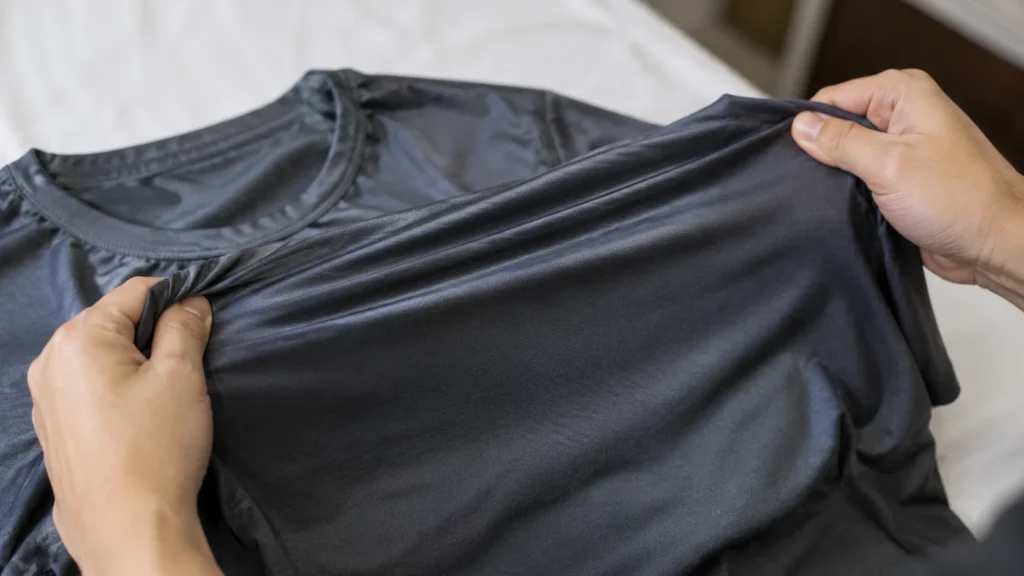
If a polyester garment is significantly too large, tailoring or alterations are often more predictable than trying to force it to shrink.
How to Shrink Nylon Clothes
Nylon is another synthetic material that generally has greater resistance to ordinary washing-related shrinkage than natural fibers. Whirlpool identifies nylon among fabrics that tend to shrink less readily.
Do not automatically use a high-heat dryer to force nylon smaller. The care label should determine the maximum appropriate temperature, because excessive heat can damage some synthetic garments.
If precise sizing is important, alteration is usually more predictable than intentional heat shrinkage.
How to Shrink Silk Clothes
Silk should not be treated like cotton. Intentional shrinking with hot water or a high-heat dryer can damage the delicate fibers, distort the garment, or cause unwanted changes in texture and appearance.
Whirlpool identifies silk among natural fibers that can be more susceptible to shrinkage, but that does not mean high heat is a safe shrinking technique.
If a silk garment is too large, follow its care label and consider professional alteration rather than intentionally exposing it to high heat.
How to Shrink Wool Clothes
Wool can shrink dramatically and unpredictably. Heat, moisture, and agitation can cause the microscopic scales on untreated wool fibers to interlock, producing felting and permanent shrinkage.
That makes wool particularly risky to shrink intentionally. A wool sweater can go from slightly oversized to significantly smaller or felted much faster than expected.
If your goal is a specific finished size, professional alteration is safer. If you are washing wool normally, follow the garment’s care claim; Woolmark-approved machine-washable wool is specifically designed to resist excessive shrinkage.
How to Shrink Clothes by Hand
Hand washing gives you more control over the garment than a machine, but it does not guarantee uniform shrinkage. For a suitable natural-fiber garment, use the warmest water permitted by its care instructions and monitor the item carefully.

Avoid aggressive wringing because mechanical stress can distort fabric rather than simply reducing its size. After washing, gently press out excess water and reshape the garment.
This approach may be useful for slight dimensional changes, but a washer and controlled dryer cycle generally provide more consistent heat and agitation.
How to Slightly Shrink Clothes
If you only want a small size reduction, avoid starting with maximum heat. A gradual approach gives you opportunities to stop before the garment becomes too small.
For suitable cotton, begin with a warm wash and measure the garment after washing. If it is still too large, use a short, controlled drying period and check it again. Whirlpool recommends monitoring garments during intentional shrinking rather than leaving them exposed to heat unnecessarily.
This is much safer than assuming one full high-heat cycle will produce exactly the amount of shrinkage you want.
How to Not Shrink Clothes in the Washer or Dryer
If your real goal is how to not shrink clothes, the basic strategy is almost the opposite of intentional shrinking. Read the care label, use cooler water when recommended, select a gentle cycle for delicate fabrics, and avoid unnecessary high dryer temperatures. Whirlpool recommends cold water and low-heat or air-dry settings to help reduce shrinkage.

For wool, silk, and other delicate materials, follow the specific care instructions rather than applying a generic laundry routine. Some wool garments are specifically engineered for machine washing without excessive shrinkage, but that protection depends on the garment’s care claim.
How to Wash Clothes So They Don’t Shrink
To minimize accidental shrinkage:
- Check the care label before washing.
- Use cold water when the label permits it.
- Choose gentle cycles for delicate garments.
- Avoid unnecessary high-speed agitation.
- Separate heavy fabrics from delicate items.
- Avoid overdrying.
- Use low heat when recommended.
- Air-dry suitable garments.
- Lay wool flat when its care instructions require it.
- Do not assume every fabric needs hot water.
- Remove garments promptly after washing.
- Avoid high heat on delicate synthetics.
- Follow manufacturer’s drying instructions.
- Wash wool on an appropriate wool or delicate cycle.
- Inspect garments after washing and before additional drying.
Whirlpool emphasizes fabric type, water temperature, cycle selection, and drying temperature as major factors in preventing unwanted shrinkage.
Is It Possible to Shrink Clothes Permanently?
Some shrinkage can be permanent, particularly when fibers undergo irreversible structural changes. Wool felting is an important example: Woolmark explains that heat, moisture, and agitation can cause fiber interlocking and permanent shrinkage.
However, not every garment will remain exactly at the new dimensions after every subsequent wash. Fabric relaxation, stretching, construction, and future care can affect measurements.
For that reason, permanent should not be interpreted as a guarantee of a fixed final size.
Common Mistakes When Trying to Shrink Clothes
Avoid these mistakes when intentionally shrinking garments:
- Ignoring the fabric composition.
- Ignoring the care label.
- Assuming all cotton shrinks equally.
- Using maximum heat immediately.
- Leaving clothes in a high-heat dryer unattended.
- Trying to shrink dry-clean-only garments.
- Treating polyester like cotton.
- Treating silk like cotton.
- Intentionally feeling a valuable wool sweater.
- Assuming pre-shrunk clothing will shrink substantially.
- Boiling clothes without considering fiber damage.
- Using excessive agitation.
- Trying to shrink stretchy garments with heat.
- Expecting perfectly even shrinkage.
- Repeating high-heat cycles without measuring the garment.
The goal should be controlled dimensional change, not simply exposing the garment to as much heat as possible.
Conclusion
The best answer to how to shrink clothes depends on the fabric. Cotton and some other natural fibers can respond noticeably to warm or hot washing and controlled drying, while polyester and nylon generally resist ordinary shrinkage. Wool can shrink dramatically through heat, moisture, and agitation, but that process can also cause irreversible felting.
If you want only a slight size reduction, work gradually and inspect the garment between stages. If you want to avoid shrinking clothes, use the opposite strategy: cooler water, appropriate gentle cycles, and low-heat or air drying according to the care label.
How do you shrink clothes quickly?
For suitable washable garments, warm or hot washing followed by controlled drying can encourage shrinkage. Cotton often responds more readily than synthetic fabrics. Monitor the garment so it does not become excessively small.
How do you shrink cotton clothes?
Wash the cotton garment using a warm or hot temperature permitted by its care label, then use controlled dryer heat if additional shrinkage is needed. Check the size between stages.
Can you shrink polyester clothes?
Polyester generally resists ordinary shrinkage more than natural fibers. High heat is not a reliable way to achieve a specific size and may damage the garment.
Can you shrink clothes in the dryer?
Yes, suitable garments can shrink in a dryer, particularly when exposed to higher heat. The amount varies by fabric and construction, so monitor the garment rather than assuming a specific result.
How do you shrink clothes without a dryer?
A warm or hot wash can cause some shrinkage in suitable fabrics. Allow the garment to air dry afterward, but expect less control than with a monitored washer-and-dryer process.
Does cotton shrink in the wash?
Cotton can shrink during washing, particularly when exposed to warm or hot water. The amount depends on how the garment was manufactured and previously processed.
How do you prevent clothes from shrinking?
Follow the care label, use cooler water when appropriate, select gentle cycles for delicate fabrics, and use low heat or air drying when recommended.
Can you shrink wool clothes?
Wool can shrink very easily, but intentional shrinking is risky because heat, moisture, and agitation can cause felting and permanent dimensional changes. Follow the garment’s care claim instead.
How long should you boil cotton clothes to shrink them?
There is no universal boiling time that guarantees a particular amount of shrinkage. Boiling can produce unpredictable results and may damage dyes, finishes, seams, or fabric. A controlled wash-and-dry process based on the care label is more appropriate.