
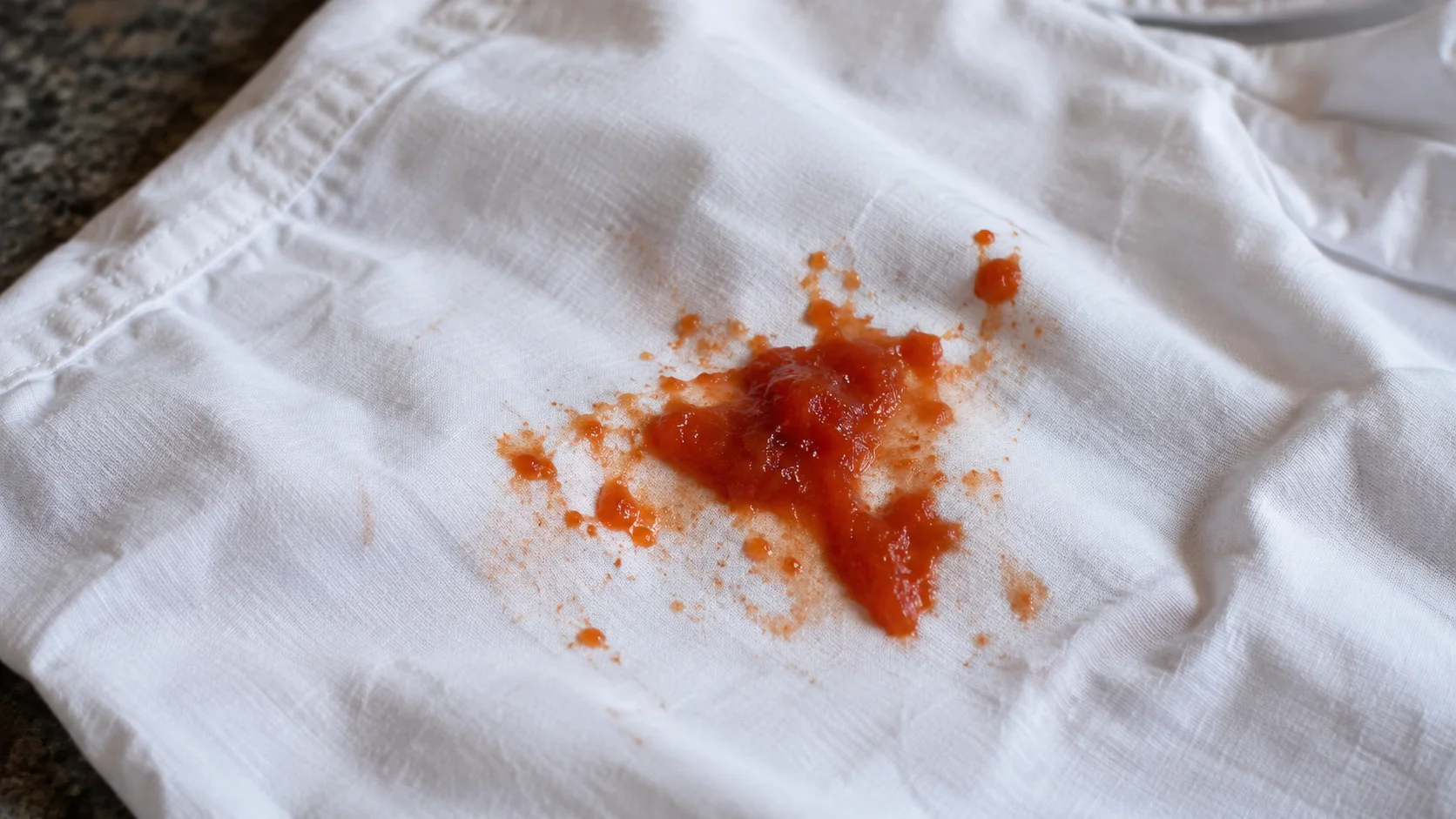
How to Remove Tomato Stains, ketchup, soup, juice, and other tomato-based foods can leave stubborn red stains on clothing, plastic containers, carpets, upholstery, and household surfaces. The combination of strong tomato pigments and, in many sauces, oils can make these marks especially noticeable. Fresh stains are generally easier to remove than stains that have dried or been exposed to heat.
The most important rule is to treat tomato stains before drying them. For washable clothing, the American Cleaning Institute recommends removing excess sauce, flushing cold water through the back of the stain, pretreating with liquid laundry detergent, and checking the stain before putting the garment in a dryer.
What Is the Best Way to Remove Tomato Stains?
The best method depends on what has been stained. Clothing needs a fabric-safe treatment, while plastic containers may need degreasing and additional stain treatment. Carpet and upholstery require controlled moisture, and delicate materials such as wool and leather should not be treated like ordinary washable fabric.
Before using any cleaner, check the manufacturer’s care instructions and test it on an inconspicuous area. For difficult stains, several gentle treatments are usually preferable to one aggressive treatment that could damage the material.
15-Step Tomato Stain Removal Method
Use this basic process as a starting point for washable, colorfast materials. Adjust it according to the surface and product instructions.
- Remove excess tomato sauce with a spoon or dull edge.
- Avoid spreading the stain to clean areas.
- Blot liquid tomato juice with a clean cloth.
- Check the material’s care instructions.
- Use cold water first on washable clothing.
- Flush water through the back of a fabric stain.
- Apply an appropriate liquid laundry detergent.
- Gently work the detergent into the stain.
- Start at the outside and move toward the center.
- Use a suitable stain remover when necessary.
- Follow the product’s recommended waiting time.
- Rinse or wash according to the care label.
- Inspect the stain before using a dryer.
- Repeat treatment if discoloration remains.
- Allow delicate or difficult items to receive professional cleaning when appropriate.
ACI specifically recommends checking the stain before drying because heat can make remaining tomato stains much harder to remove.
How to Remove Tomato Stains from Clothes
Start by removing any solid tomato sauce with a spoon or dull knife without grinding it into the fabric. For washable clothing, run cold water through the back of the stain rather than directly onto its front. This helps push loosened tomato material away from the fabric instead of driving it deeper.
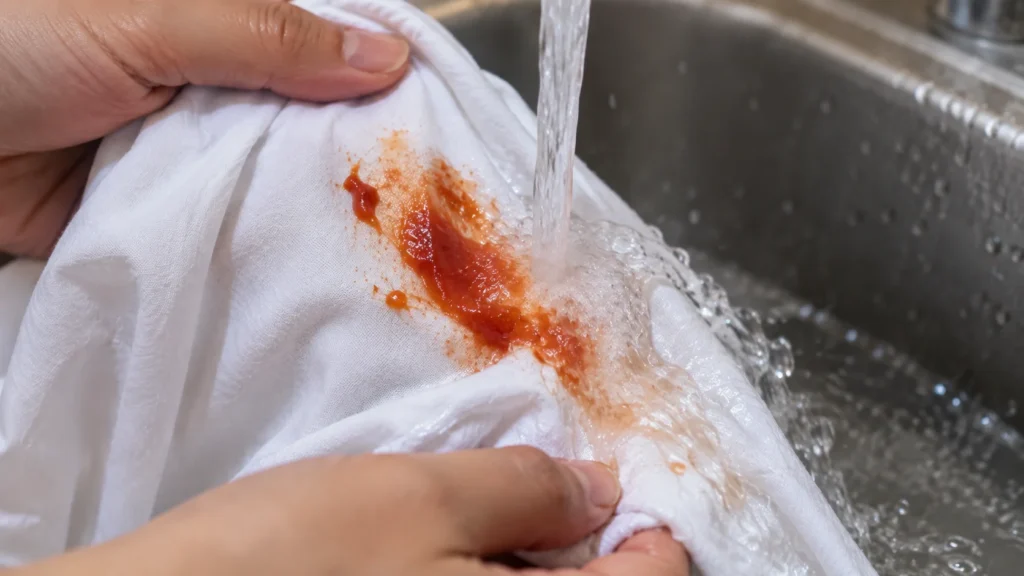
Next, gently work liquid laundry detergent into the affected area and launder according to the garment’s care label. If the stain remains after washing, treat it again before drying. Tide also recommends repeating treatment when necessary rather than putting a stained garment into the dryer.
How to Get Tomato Sauce Out of Clothes
Tomato sauce stains can contain both red pigments and oils, so simply rinsing may not always be enough. Remove excess sauce first, rinse from the back with cold water, and pretreat the remaining mark with an appropriate laundry stain remover or liquid detergent.
For a stubborn stain, ACI recommends detergent pretreatment followed by soaking in warm water for about 30 minutes if the stain remains. Afterward, rinse and launder according to the fabric-care instructions.
Do not dry the garment until you have confirmed that the stain is gone. If a faint red or orange shadow remains, repeat the treatment instead of applying dryer heat.
How to Remove Old Tomato Sauce Stains from Clothing
Old tomato sauce stains are more challenging because the pigment may have had time to settle into the fibers, and previous washing or drying may have made the discoloration more persistent. Start by checking the garment label and identifying whether the fabric is washable.
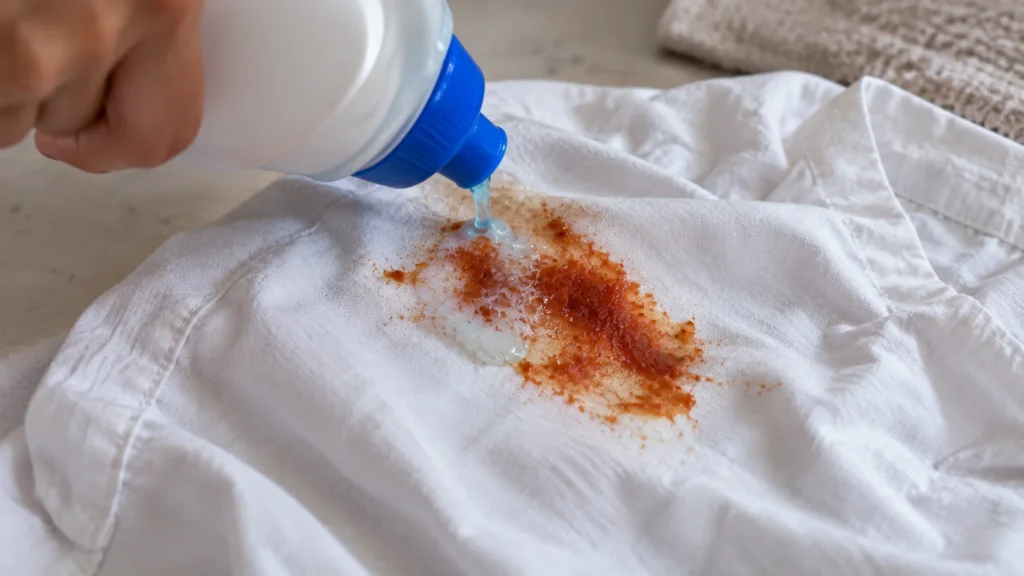
Apply an appropriate prewash stain remover or liquid detergent and allow it to work according to the product directions. ACI recommends repeating pretreatment and, for persistent stains, soaking the garment in warm water for 30 minutes before rinsing and laundering.
Some old stains can be improved but may not disappear completely, especially after repeated heat exposure. Avoid assuming that stronger chemicals will automatically produce better results.
How to Remove Tomato Stains from White Clothes
Red tomato sauce can be particularly obvious on white shirts, white cotton, and other light fabrics. First scrape away excess sauce and rinse cold water through the back of the stain. Then pretreat with liquid laundry detergent or a suitable stain remover.
For white or colorfast garments, ACI lists mild bleaching options such as hydrogen peroxide or white vinegar in its tomato-stain guidance, followed by thorough rinsing. However, the garment-care label should always take priority, and a hidden-area test is important before using any bleaching agent.
OxiClean also advises testing its products first and specifically excludes materials such as wool, silk, leather, and dry-clean-only fabrics from certain treatments.
How to Remove Dried Tomato Stains from Clothes
A dried tomato stain should not be treated as if it were a fresh spill. Begin by removing any dried residue from the surface, then pretreat the remaining discoloration with a suitable laundry stain remover.
OxiClean’s current guidance for dried tomato sauce recommends pretreatment followed by washing in the warmest water permitted by the garment-care label, with a warning to test first and avoid unsuitable delicate materials.
After washing, inspect the garment carefully. If the stain remains, repeat the treatment rather than drying it immediately. Heat can make a persistent stain considerably more difficult to remove.
How to Remove Tomato Stains from Plastic and Tupperware
Tomato sauce can leave orange or red discoloration on plastic containers, especially after storing or microwaving tomato-based foods. Start by removing leftover food and washing the container with dish soap and warm water.
The American Cleaning Institute recommends additional stain-removal steps for plastic food containers, including leaving the container in direct sunlight for several hours or using a properly diluted bleach solution when appropriate. After either method, the container should be thoroughly washed, drained, and dried before reuse.
Always follow the manufacturer’s instructions for the specific container, especially if it has been microwaved. Some plastics are not designed for high heat, and ACI notes that containers unable to withstand hot water or microwave conditions may need to be discarded.
How to Remove Tomato Stains from Microwaved Plastic
Microwaving tomato sauce can make plastic discoloration more noticeable because heat can contribute to staining. Allow the container to cool, remove remaining food, and wash it with warm water and dish soap.
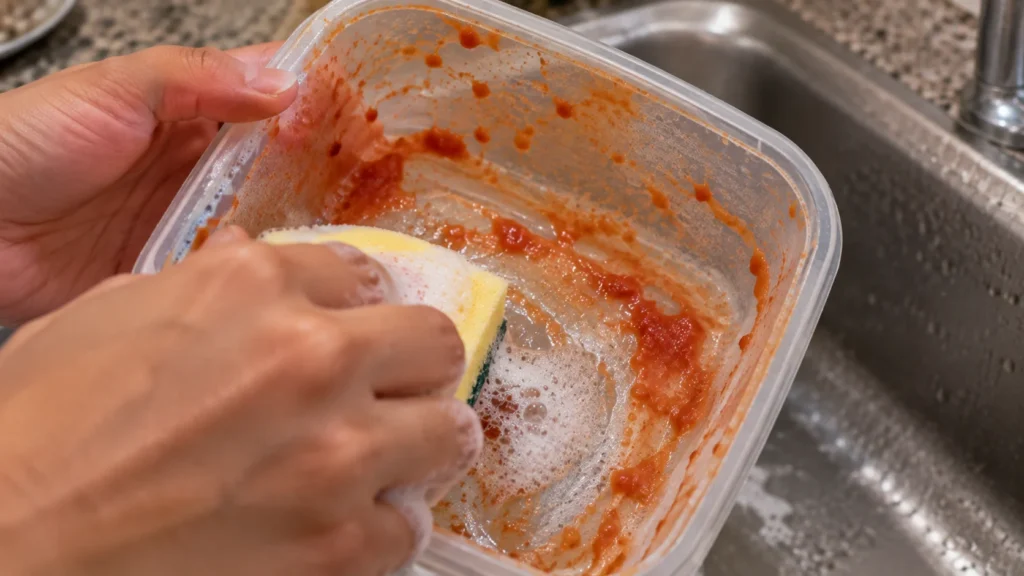
If a red mark remains, ACI recommends sunlight exposure as one option for remaining plastic stains. It also lists a properly diluted bleach solution as another option for suitable plastic food containers, followed by thorough washing.
Do not automatically use bleach on every plastic item. Check the manufacturer’s instructions and ensure the container is suitable for the proposed treatment.
How to Remove Tomato Stains from Carpet
For tomato sauce on carpet, immediately remove excess sauce without pushing it deeper into the pile. Blot liquid with a clean cloth and then use a carpet-compatible stain remover according to its directions.
OxiClean’s carpet guidance recommends removing excess moisture, applying its carpet product, allowing the specified treatment time, and blotting with a clean colorfast cloth or sponge.

Avoid soaking carpet unnecessarily. Excess moisture can spread a stain and create additional drying problems. For wool or other fine-fiber carpets, use products specifically approved for the fiber and follow professional carpet-care guidance.
How to Remove Tomato Sauce Stains from Carpet and Couch
Upholstery needs more caution than ordinary washable clothing because the fabric, backing, filling, and dyes can react differently to moisture. First remove excess tomato sauce and blot rather than scrub.
For water-washable upholstery, OxiClean recommends applying its prepared solution to a clean white towel rather than directly pouring the solution onto the upholstery stain, then blotting and rinsing with a damp white towel.
Check the upholstery cleaning code or manufacturer’s instructions before using water. If the couch is not water-washable, valuable, antique, or made from a delicate material, professional upholstery cleaning is a safer option.
How to Remove Tomato Stains from Silicone, Rubber and Plastic Bowls
Silicone and rubber should not automatically be treated like ordinary plastic. Begin with warm water and dish soap to remove tomato residue and grease. For a persistent stain, use a cleaner that the material’s manufacturer considers compatible.
For food-storage plastic, ACI recommends washing with dish soap and warm water and provides additional methods for remaining stains.
If the item has absorbed a strong odor or remains heavily discolored after appropriate cleaning, consider replacing it rather than repeatedly applying stronger chemicals.
How to Remove Tomato Sauce Stains from Walls
Fresh tomato sauce on a painted wall should be removed gently to avoid damaging the paint. Carefully lift solid sauce first, then wipe the area with a soft cloth lightly dampened with an appropriate mild cleaning solution.
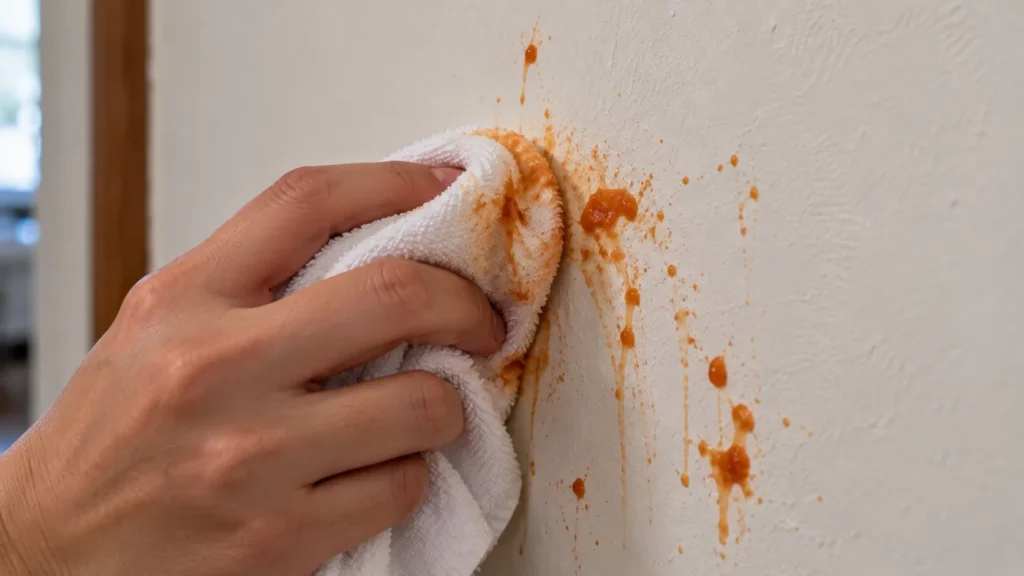
Do not saturate drywall or repeatedly scrub a painted surface. Strong cleaners can affect paint sheen or color, particularly on flat or matte finishes.
Test any cleaner in an inconspicuous area first. For wallpaper, delicate paint, or porous wall coverings, follow the manufacturer’s cleaning instructions rather than applying a general stain-removal recipe.
How to Remove Tomato Sauce Stains from Jeans, Sweaters and Linen
Jeans, sweaters, and linen can all react differently to cleaning products. Check the care label before treating the stain and remove as much tomato residue as possible without rubbing it deeper into the fibers.
For washable cotton or denim, cold-water flushing from the back followed by detergent pretreatment is a practical starting point.
For sweaters made from wool or other delicate fibers, avoid ordinary stain-removal chemicals unless the product is specifically approved for that fiber. WoolSafe recommends using approved products and testing them on an inconspicuous area first.
Jump into Other Related Article
- How to Remove Peanut Butter Stains | Easy Ways to Clean Clothes, Fabric & More
- How to Remove Coffee Stains | Easy Methods for Clothes, Teeth, Carpet & More
- How to Clean a Sink Drain | Remove Odors, Hair, Grease & Clogs
How to Remove Tomato Stains from Leather
Leather requires a completely different approach from washable clothing. Do not soak leather or automatically apply laundry detergent, vinegar, hydrogen peroxide, or oxygen bleach.
Instead, remove surface tomato residue carefully and follow the leather manufacturer’s cleaning instructions. If sauce has penetrated the leather or caused discoloration, a professional leather cleaner may be needed.
This is especially important for finished, suede, nubuck, or specialty leather because different leather types have different moisture and cleaning tolerances.
How to Remove Green Tomato Plant Stains
Green tomato plant residue should be treated according to the material on which it has landed. For washable fabric, remove plant material without rubbing, then rinse and pretreat according to the garment-care instructions.
For older plant stains, use a fabric-appropriate stain remover and inspect the material before drying. Avoid assuming that a method designed for tomato sauce will automatically work on every plant-based stain.
Common Mistakes When Removing Tomato Stains
Avoid these common mistakes when treating tomato, ketchup, marinara, or spaghetti sauce stains:
- Letting fresh tomato sauce dry before treatment.
- Rubbing the stain aggressively.
- Rinsing fabric from the wrong side.
- Using hot water immediately on a fresh fabric stain.
- Putting a stained garment in the dryer.
- Using bleach without checking fabric compatibility.
- Applying multiple cleaning chemicals together.
- Ignoring the garment-care label.
- Using laundry products on leather.
- Using ordinary household detergent on delicate wool carpet.
- Over-wetting carpet.
- Scrubbing upholstery aggressively.
- Applying strong chemicals to painted walls.
- Assuming all plastic containers tolerate bleach or heat.
- Skipping an inconspicuous-area test.
ACI and major cleaning-product manufacturers consistently emphasize following care labels, testing products where appropriate, and checking stains before drying.
Conclusion
Knowing how to remove tomato stains is mainly about choosing the right method for the material and treating the stain before it becomes set. For washable clothing, remove excess sauce, rinse from the back with cold water, pretreat, wash according to the care label, and avoid dryer heat until the stain has disappeared.
For plastic, Tupperware, carpet, upholstery, wool, leather, and other surfaces, use material-specific methods rather than one universal cleaner. WoolSafe recommends approved products and professional assistance when fine-fiber carpets have large spills or old set-in stains.
How do you remove tomato stains quickly?
Remove excess tomato, rinse washable fabric from the back with cold water, pretreat with suitable detergent or stain remover, and wash according to the care label.
Can tomato stains come out of clothes?
Yes, many fresh tomato stains can be removed successfully. Old or heat-set stains can be more difficult and may require repeated treatment.
How do you remove old tomato sauce stains from clothing?
Pretreat the stain with an appropriate stain remover or liquid detergent, allow it to work as directed, wash according to the care label, and repeat if necessary. Do not dry the garment while the stain remains.
How do you remove tomato stains from plastic?
Wash the container with warm water and dish soap first. For persistent stains, ACI recommends options such as sunlight exposure or a properly diluted bleach solution when appropriate for the container.
How do you remove tomato stains from white clothes?
Rinse the stain from the back with cold water, pretreat it, and wash according to the care label. For suitable white or colorfast fabrics, ACI lists mild bleaching options, but compatibility should always be checked first.
Can you remove dried tomato sauce stains?
Often, yes, although dried stains can be more difficult. Pretreatment and repeated washing may help, but stains exposed to dryer heat can become particularly stubborn.
How do you remove tomato sauce from carpet?
Remove excess sauce, blot rather than scrub, and use a carpet-compatible stain remover according to its instructions. Avoid excessive moisture, especially on delicate carpet fibers.
How do you remove tomato sauce from Tupperware?
Wash the container with warm water and dish soap first. If discoloration remains, use a manufacturer-compatible stain treatment; ACI also recommends sunlight exposure as an option for plastic food containers.