
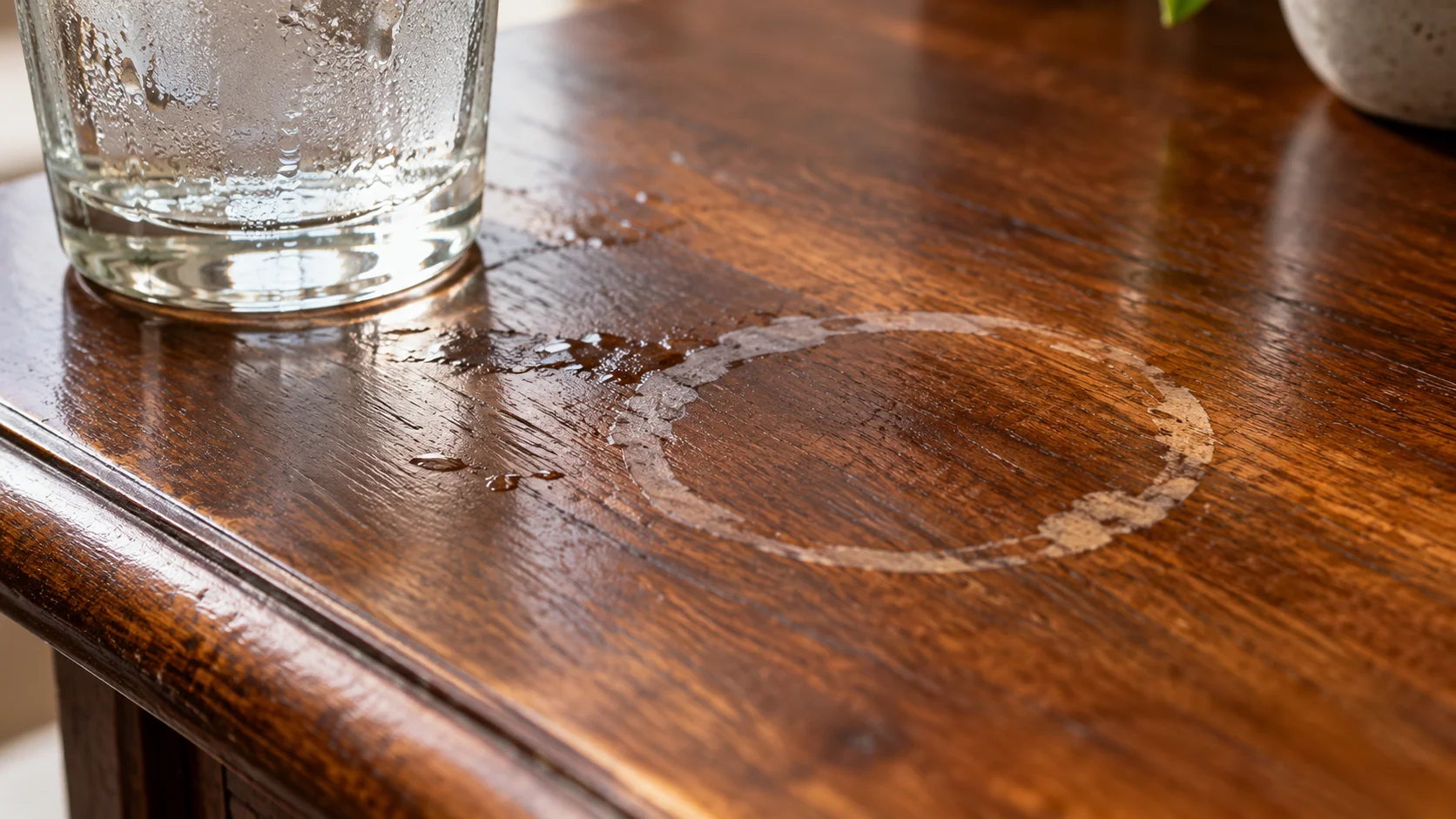
Water stains can appear almost anywhere around the home, from white rings on wooden furniture to cloudy marks on glass shower doors, mineral buildup in toilets, and discoloration on stainless steel. The important first step is identifying what caused the mark. Ordinary water spots, hard-water mineral deposits, rust-related staining, and moisture damage do not always respond to the same cleaning method.
Hard water is particularly associated with calcium and magnesium, which can remain behind when water evaporates and form chalky or crusty deposits. The safest approach is to match the cleaner and technique to the surface, work gently, and test an inconspicuous area first.
What Causes Water Stains?
Water stains are not always simply “dirt left by water.” When water evaporates, dissolved minerals can remain on a surface, while prolonged moisture can affect finishes, fabrics, wood, and painted surfaces differently. Hard-water deposits are mainly associated with calcium and magnesium, and they can become more noticeable after repeated evaporation.
The appearance can also provide a clue. White or cloudy marks are commonly associated with mineral deposits, while orange or reddish staining can indicate iron, and brown, black, blue, or green discoloration can have other water-quality or corrosion-related causes.
Before cleaning, consider:
- White, chalky residue: often hard-water mineral buildup.
- Clear circular marks on furniture: may be moisture trapped in a finish.
- Orange or rust-colored marks: may involve iron.
- Brown or tea-colored stains: can be associated with manganese or tannins.
- Blue-green staining: can be related to copper corrosion.
- Dark stains: may indicate a deeper moisture or water-quality problem.
Jump into Other Related Article
- How to Clean Stainless Steel Sink | Stains, Hard Water, Rust & Scratches
- How to Clean Kitchen Cabinets | A Complete Guide for Wood, Grease, Painted & Laminate Cabinets
- How to Remove Stains from Carpet | Complete Guide for Coffee, Pet, Wine, Urine & More
How to Remove Hard Water Stains
For hard water stains, an acidic cleaner such as diluted white vinegar can help dissolve mineral buildup on compatible surfaces. The Spruce recommends equal parts vinegar and water for suitable metal and glass surfaces, allowing the solution to sit before gently scrubbing.
Do not assume vinegar is safe for every material. Acidic cleaners can damage or etch acid-sensitive stone such as marble and some other natural stone surfaces. Always check the manufacturer’s care instructions before treating stone, specialty finishes, or delicate materials.
For stubborn deposits, a purpose-made hard water stain remover may be more appropriate than repeatedly scrubbing with household ingredients. If deposits continually return, cleaning alone may only treat the symptom because the minerals remain in the water supply.
15-Step Method to Remove Hard Water Stains Safely
Hard water deposits usually respond better when you give the cleaning solution time to work rather than relying on aggressive scrubbing. Use the following sequence for compatible surfaces:
- Identify whether the mark is actually a hard-water deposit.
- Check the manufacturer’s cleaning instructions for the surface.
- Remove loose dust and debris first.
- Start with the least aggressive suitable cleaner.
- Mix equal parts white vinegar and water for compatible glass or metal surfaces.
- Apply the solution with a cloth or spray bottle.
- Allow it to sit for several minutes rather than immediately scrubbing.
- Use a soft sponge or soft-bristle brush.
- Gently work across the mineral deposit.
- Rinse the surface thoroughly with clean water.
- Dry the area completely with a clean microfiber cloth.
- Repeat the treatment if a thin mineral film remains.
- Use a commercial hard-water remover when household methods are insufficient.
- Test stronger products in a hidden area first.
- Avoid mixing cleaning chemicals, especially products containing bleach with acidic cleaners.
The Spruce similarly recommends allowing vinegar or other cleaning solutions time to loosen deposits before gentle scrubbing.
How to Remove Water Stains from Wood
Water stains on wood require a different approach from hard-water deposits on glass or ceramic. A white ring often indicates moisture has affected the finish rather than deeply penetrating the wood, while a dark mark can indicate deeper damage.
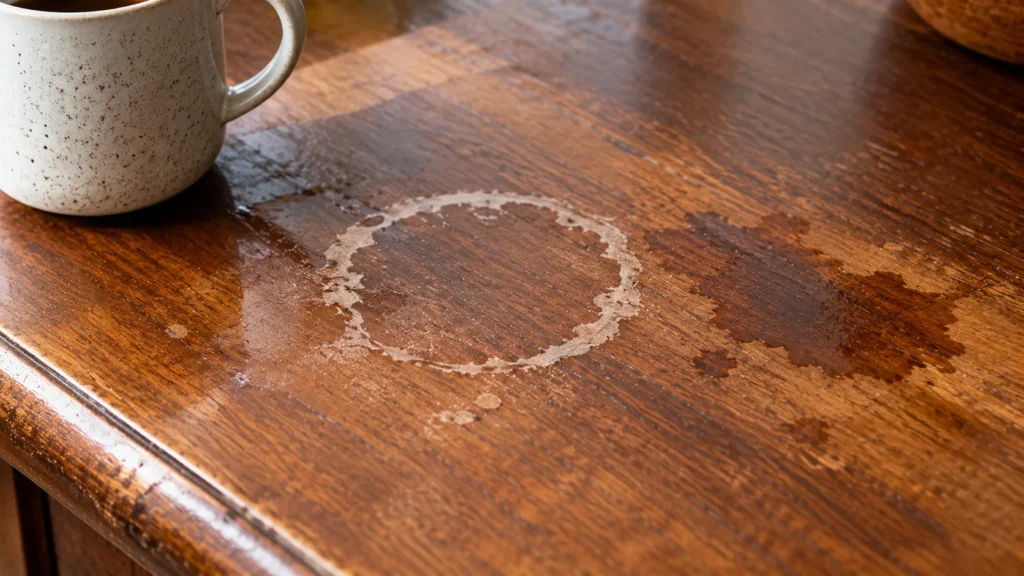
For a light white water ring, start with a gentle furniture-safe method rather than immediately sanding. WOOD Magazine notes that mayonnaise, petroleum jelly, or shortening may sometimes reduce a white water mark because oil can penetrate the affected finish. However, results vary and the treatment should be tested carefully.
If the mark is dark, swollen, cracked, or associated with damaged veneer, aggressive home remedies can make the problem worse. Deep water damage may require sanding, bleaching, refinishing, or professional furniture restoration.
For unfinished wood, the treatment is different again. Surface sanding may remove a superficial waterline, but the entire area should be treated consistently to prevent an obvious patch.
How to Get Water Stains Out of Glass
Glass shower doors and windows frequently develop cloudy water spots because minerals remain after droplets evaporate. Hard-water deposits can become increasingly difficult to remove when they are allowed to accumulate.
For fresh or moderate deposits, spray a suitable diluted vinegar solution over the affected glass and allow it to work before wiping with a non-abrasive sponge. The Spruce recommends vinegar and water for compatible glass surfaces and advises allowing the solution to sit before gentle scrubbing.
For particularly stubborn hard water stains on glass, a commercial mineral-deposit remover may be necessary. Follow the product label closely, ventilate the area, wear appropriate protection, and rinse the glass thoroughly afterward.
To reduce new spots, dry shower glass after use rather than allowing droplets to evaporate repeatedly.
How to Clean Hard Water Stains in a Toilet
Hard water stains in a toilet commonly appear as white, gray, yellow, or brown mineral buildup around the waterline or bowl. Regular toilet cleaning may remove surface soil, but established mineral deposits can require an acidic descaling product.
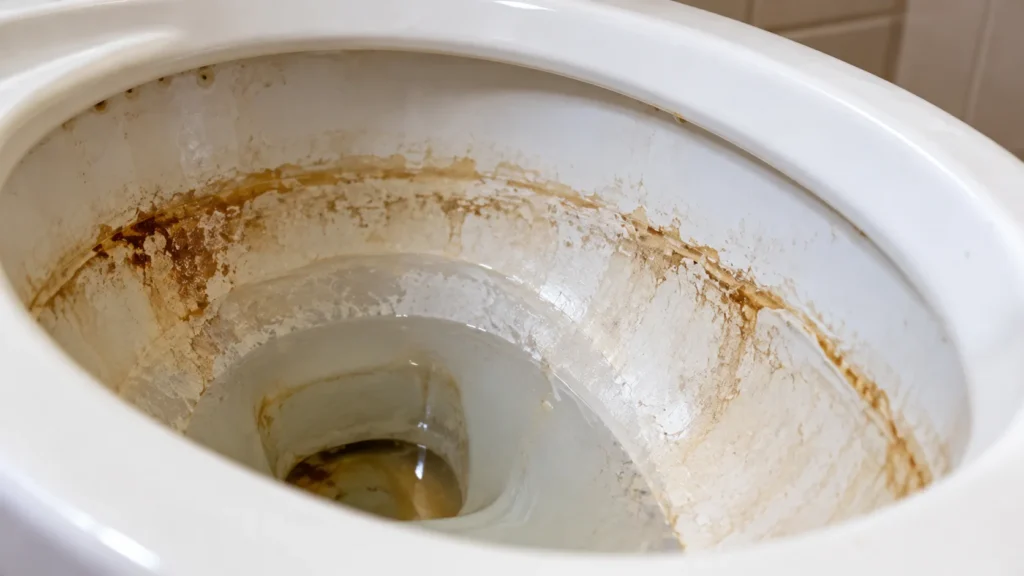
For a mild deposit, apply an appropriate toilet-safe cleaner and allow the product to dwell according to its label. A toilet brush can then loosen the softened residue without requiring excessive force.
For severe buildup, choose a product specifically labeled for mineral or hard-water deposits and compatible with the toilet’s material. Never combine toilet cleaners with bleach or other household chemicals unless the manufacturer specifically says the combination is safe.
If the same hard water toilet stains repeatedly return, the underlying water chemistry may be contributing to the problem. Hard water can produce scale because calcium and magnesium can precipitate and accumulate on plumbing surfaces.
How to Remove Hard Water Stains from Stainless Steel
Stainless steel can develop cloudy spots, white mineral deposits, and streaks when water dries on the surface. Start by wiping the area with a soft microfiber cloth and a mild cleaner, following the grain of the stainless steel where visible.
For mineral buildup, a compatible diluted acidic cleaner can help dissolve deposits, but it should not be left on the metal indefinitely. Rinse thoroughly after treatment and dry the surface completely.
Avoid abrasive powders, steel wool, or aggressive scrubbing because they can scratch the finish. For appliances, sinks, and fixtures, always follow the manufacturer’s cleaning recommendations before using vinegar, commercial descalers, or other specialty products.
How to Remove Water Stains from Fabric and Clothes
Water marks on fabric are different from mineral stains on bathroom fixtures. If the mark comes from ordinary water, laundering the entire garment according to its care label may help eliminate uneven drying or residue.
For clothing, use the care label as your first guide and avoid choosing hot water simply because it seems stronger. The American Cleaning Institute recommends treating stains early, following fabric-care instructions, and using the warmest setting that is safe for the fabric when appropriate.
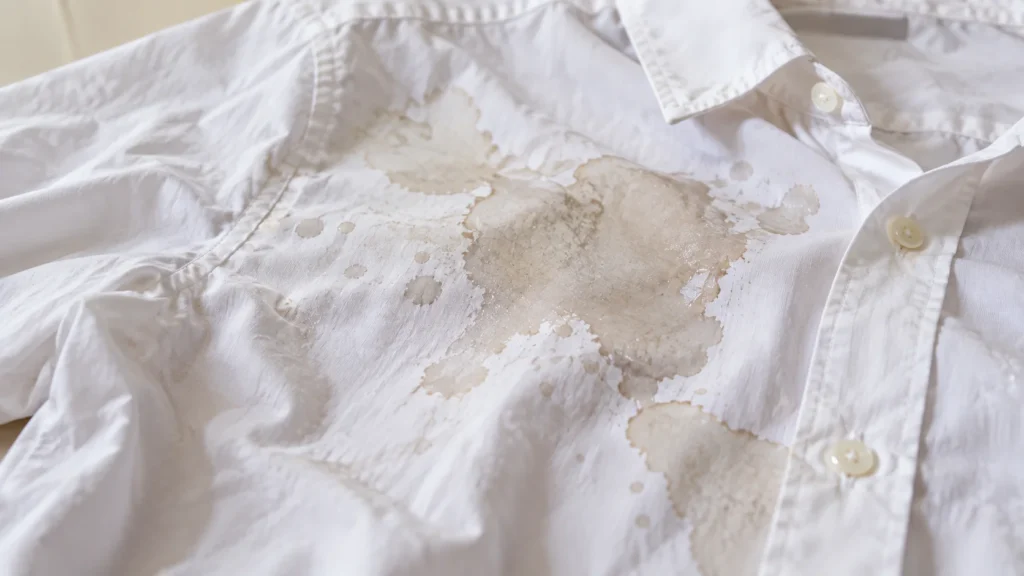
If the discoloration is actually caused by minerals, rust, or another substance carried by the water, ordinary washing may not be enough. Identify the specific stain before choosing a treatment.
Water Temperature: Hot or Cold Water for Stains?
There is no single temperature that works best for every stain. The right choice depends on the substance, fabric, and care label.
- Use cold water when the stain type calls for it.
- Use warm water when the fabric and stain treatment permit it.
- Use the warmest safe setting for appropriate stubborn laundry stains.
- Avoid hot water when it can set or worsen a particular stain.
- Always follow the garment’s care instructions.
- Do not assume hotter automatically means cleaner.
- Delicate fabrics generally need gentler treatment.
- Test questionable treatments before applying them broadly.
- Pretreat stubborn stains before washing.
- Allowing stain removes enough contact time.
- Do not put a stained garment in the dryer prematurely.
- Check the item after washing.
- Repeat treatment if necessary.
- Avoid excessive rubbing on delicate fibers.
- Stop and seek professional cleaning advice for valuable or dry-clean-only items.
ACI specifically advises against putting clothing in the dryer until the stain has been removed because drying can make some stains more difficult to eliminate.
How to Remove Water Stains from Uggs
Water stains on suede or sheepskin boots require more care than washable fabric. Instead of soaking one small area, follow the manufacturer’s cleaning instructions and avoid aggressive rubbing that could change the nap or color.
For UGG footwear, use products and techniques approved for the specific material. Uneven wetting can create additional marks, so the objective is controlled cleaning rather than simply applying more water.
Do not use household vinegar, bleach, strong detergents, or abrasive cleaners on suede footwear unless the manufacturer specifically approves them.
How to Remove Water Stains from a Ceiling
A ceiling water stain should not automatically be treated as a cosmetic cleaning problem. A brown or yellow ceiling mark can indicate a plumbing leak, roof problem, condensation, or another source of moisture.
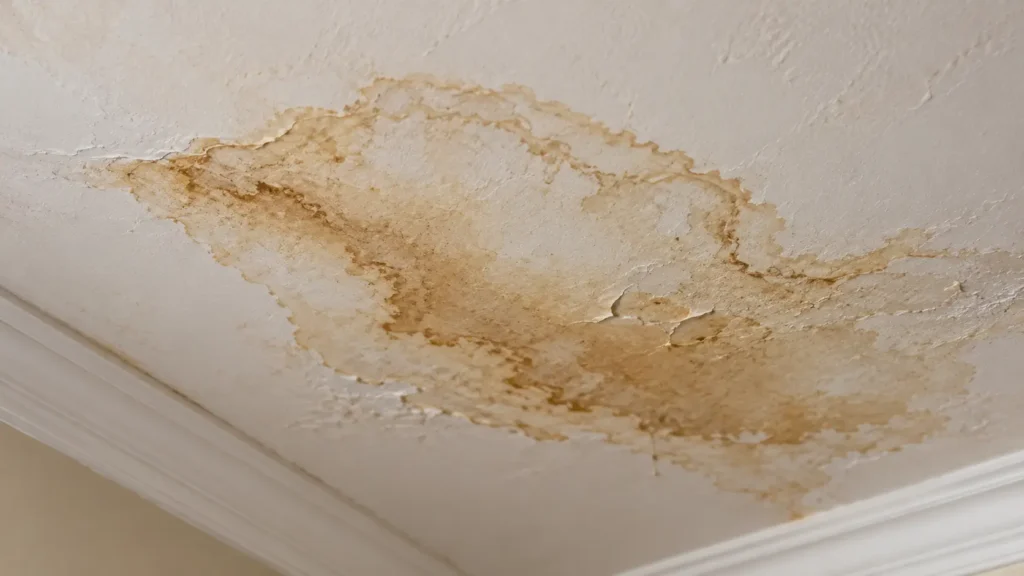
First identify and repair the source of the water. Cleaning or painting over a stain before the moisture problem is corrected can result in the mark returning.
Once the area is completely dry and the underlying problem has been addressed, the damaged surface may need cleaning, stain-blocking primer, and repainting. If drywall is soft, swollen, crumbling, or repeatedly becoming wet, professional assessment may be appropriate.
What Removes Hard Water Stains Best?
The best cleaner depends on the surface and the type of deposit rather than one universal product.
For glass and compatible metal: diluted vinegar can help dissolve mineral deposits.
For ceramic and grout: baking soda-based cleaning methods can provide gentle abrasion.
For stubborn deposits: a commercial hard-water remover may be more effective.
For toilets: use a toilet-safe descaling or mineral-deposit product.
For stainless steel: use a compatible cleaner and rinse/dry thoroughly.
For wood: treat the finish and type of water mark rather than using a generic mineral cleaner.
The Spruce identifies vinegar, baking soda, hydrogen peroxide, and toothpaste as options for different hard-water-stained surfaces, while also emphasizing surface suitability.
How to Prevent Water and Hard Water Stains
Removing a stain is only half the solution when the same deposits keep returning. Water that remains on a surface has more opportunity to evaporate and leave dissolved minerals behind.
Simple prevention includes:
- Dry shower glass after use.
- Wipe faucets after cleaning.
- Dry stainless-steel sinks instead of letting them air-dry.
- Clean mineral deposits before they become thick.
- Use a squeegee on glass shower doors.
- Keep bathroom surfaces ventilated.
- Repair plumbing leaks promptly.
- Follow appliance and fixture care instructions.
- Test well water when unusual staining occurs.
- Consider water treatment if mineral-related problems are persistent.
If hard-water problems are widespread throughout the home, a water-softening system may address the underlying calcium and magnesium issue. EPA explains that cation-exchange softeners remove calcium and magnesium ions by exchanging them with sodium or potassium ions.
When Water Stains Need More Than Cleaning
Persistent staining can sometimes indicate a water-quality issue rather than a simple housekeeping problem. Clean Water Store notes that iron, manganese, tannins, copper, and other water-chemistry factors can produce different colors and types of household staining.
If you repeatedly see orange, brown, black, blue-green, or unusual stains throughout toilets, sinks, laundry, and fixtures, consider testing the water instead of continuously applying stronger cleaners. A water test can help identify whether hardness, iron, manganese, copper, pH, or another factor is contributing to the staining.
Common Mistakes When Removing Water Stains
Several cleaning mistakes can turn a manageable stain into surface damage.
- Using abrasive pads on glass or stainless steel.
- Scrubbing wood finishes aggressively.
- Using vinegar on marble or other acid-sensitive stone.
- Mixing bleach with acidic cleaners.
- Leaving acidic products on surfaces longer than directed.
- Using hot water on a stain that should be treated with cold water.
- Applying too much water to unfinished wood.
- Ignoring a recurring ceiling stain.
- Using a toilet cleaner on an incompatible surface.
- Skipping the manufacturer’s care instructions.
- Failing to test a new cleaner.
- Assuming every brown stain is hard water.
- Treating deep wood damage as a simple surface stain.
- Drying stained clothing before checking the result.
- Continuing with DIY treatments when valuable materials may be damaged.
Conclusion
Water stains can come from simple evaporation, hard-water minerals, rust, corrosion, or actual moisture damage, so identifying the stain before cleaning is essential. For compatible glass and metal surfaces, diluted vinegar can help with mineral deposits, while commercial descalers may be useful for stubborn buildup.
Wood, suede, fabric, ceilings, toilets, and stainless steel each require different care. If staining keeps returning across multiple areas of your home, consider investigating the water quality itself rather than repeatedly removing the visible deposits.
Are water stains the same as hard water stains?
Not always. Hard water stains are generally mineral deposits associated with dissolved minerals such as calcium and magnesium, while ordinary water spots or moisture marks can have different causes.
How do you get rid of hard water stains?
Use a surface-appropriate mineral remover. Diluted white vinegar can work on compatible glass and metal surfaces, while commercial hard-water removers may be useful for stubborn deposits.
How do you remove water stains from wood?
Identify whether the mark is a white finish ring or deeper dark water damage. Light white rings may sometimes respond to gentle finish-safe treatments, while deep stains may require sanding, refinishing, or professional restoration.
How do you remove hard water stains from glass shower doors?
Apply a suitable diluted vinegar solution, allow it to sit briefly, then gently scrub with a non-abrasive sponge and rinse. For severe buildup, use a commercial product designed for mineral deposits and compatible with glass.
What is the best water temperature for removing stains from clothes?
There is no universal temperature. Follow the fabric care label and stain-specific guidance; ACI recommends cold water for some stains and the warmest safe setting for appropriate tougher stains.
Can hard water stains come back after cleaning?
Yes. If the underlying water contains high levels of minerals, new deposits can form whenever water repeatedly evaporates on a surface. Addressing the water source or using appropriate water treatment can help reduce recurrence.