

Granite countertops are durable, attractive, and relatively easy to maintain, but they still need the right cleaning routine. The safest approach is to use a neutral stone cleaner or mild soap with warm water, a soft cloth, and thorough drying. The Natural Stone Institute recommends avoiding acidic cleaners and abrasive products because unsuitable chemicals can dull or damage natural stone surfaces.
Whether you want to know how to clean granite countertops daily, remove stains, clean black or white granite, deal with hard-water marks, or prepare granite for sealing, the material and finish should determine your method. Granite is naturally resistant to many everyday problems, but cleaning products, spills, moisture, and worn sealers can affect its appearance over time.
How to Clean Granite Countertops Properly
For everyday cleaning, remove crumbs and loose debris first, then wipe the granite with a soft microfiber cloth and warm water containing a small amount of mild dishwashing detergent or a neutral stone cleaner. Rinse away cleaning residue and dry the surface rather than allowing water to evaporate naturally.
Avoid treating granite like glass or ordinary tile. Vinegar, lemon juice, acidic cleaners, abrasive powders, and harsh scrubbing tools are poor choices for routine stone care. The Natural Stone Institute specifically recommends neutral cleaners, stone soap, or mild liquid dishwashing detergent and warns against acidic and abrasive products.
15-Step Granite Countertop Cleaning Routine
This routine works well for normal sealed granite and can be adjusted according to the manufacturer’s instructions.
- Remove crumbs and loose debris.
- Wipe away food particles with a soft cloth.
- Prepare warm water and a small amount of mild soap.
- Use a pH-neutral stone cleaner if preferred.
- Dampen a microfiber cloth rather than soaking the counter.
- Wipe the entire granite surface.
- Pay extra attention to areas around the sink.
- Clean spills as soon as they occur.
- Gently wipe greasy areas more than once if necessary.
- Avoid abrasive scrubbers and scouring powders.
- Never use vinegar or lemon juice as a routine granite cleaner.
- Rinse the surface with clean water.
- Remove remaining soap residue.
- Dry the countertop with a clean microfiber towel.
- Inspect the surface for stains, streaks, or areas needing deeper treatment.
The Natural Stone Institute recommends thoroughly rinsing and drying stone after cleaning because excessive soap or cleaner can leave a film and create streaks.
How to Clean Granite Countertops Daily
Daily granite care does not need to be complicated. Wipe crumbs, food residue, and spills as soon as possible, particularly around food-preparation areas and sinks. A soft microfiber cloth with warm water and a suitable neutral cleaner is usually sufficient for routine maintenance.
Drying is also important because standing water can leave mineral deposits and make the countertop look dull. Coasters, cutting boards, and trivets can reduce contact with liquids, food, and heat.
Jump into Other Related Article
- How to Remove Peanut Butter Stains | Easy Ways to Clean Clothes, Fabric & More
- How to Remove Coffee Stains | Easy Methods for Clothes, Teeth, Carpet & More
- How to Remove Stains from Carpet | Complete Guide for Coffee, Pet, Wine, Urine & More
How to Clean Granite Countertops in the Bathroom
Bathroom granite countertops need the same basic gentle-cleaning approach, but water and soap residue deserve additional attention. Wipe around faucets and fixtures regularly so moisture does not remain on the stone. The Natural Stone Institute recommends using a squeegee in wet areas and a non-acidic product when soap scum needs deeper cleaning.

For daily bathroom cleaning, use a soft cloth and neutral stone cleaner, then rinse and dry. Avoid bathroom cleaners containing acids simply because they are designed for removing mineral buildup from other surfaces.
How to Remove Stains from Granite Countertops
Granite stains can have different causes, so identifying the stain first is important. Coffee, tea, wine, food, and other organic materials can create pinkish or brown discoloration, while rust and other metal stains can behave differently.
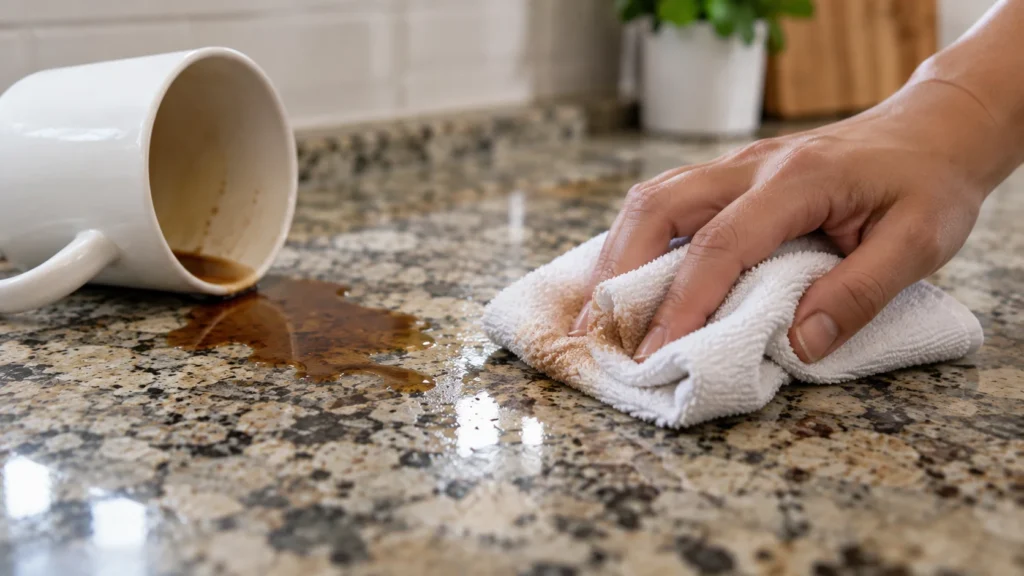
For a fresh spill, blot rather than wipe it across the countertop. For persistent stains, the Natural Stone Institute recommends specialized poultice techniques for some stain categories, particularly deep metal staining. Difficult or deeply absorbed stains are better handled by a stone-care professional than by repeatedly applying household chemicals.
How to Clean Granite Countertops Water Stains and Hard-Water Marks
Water rings and hard-water deposits are common around sinks and faucets. Start with a soft cloth and a neutral stone-safe cleaner rather than reaching for vinegar or lemon juice. Acidic products can damage or dull susceptible natural-stone surfaces and may also affect protective treatments.
For stubborn mineral deposits, use a product specifically formulated for granite or natural stone and follow its instructions. Do not scrape aggressively with metal tools, because scratching or damaging the finish can create a larger restoration problem.
How to Clean and Seal Granite Countertops
Sealing and cleaning are related but they are not the same thing. A penetrating sealer can make some granite more resistant to moisture and staining, but sealing does not make granite completely stain-proof. The Natural Stone Institute notes that many granites may benefit from sealing, while some stones may not require it.
Before resealing, clean the countertop thoroughly and allow it to dry. Follow the sealer manufacturer’s instructions for application, dwell time, and removal of excess product. For food-preparation areas, choose a sealer specifically suitable for that use.
How to Clean Granite Countertops Before Sealing
Before applying a sealer, remove grease, dirt, soap residue, and existing surface buildup. A neutral stone cleaner is generally preferable to acidic household cleaners. The surface should be completely clean and dry before sealing.

Do not seal simply because a calendar says it is time. Granite varies in porosity, and the Natural Stone Institute explains that sealing requirements differ between stones. Follow the recommendations of the stone supplier, fabricator, and sealer manufacturer.
How to Clean Black and White Granite Countertops
Black granite can make dust, fingerprints, soap residue, and water marks particularly visible. Use a clean microfiber cloth, a small amount of neutral cleaner, and thorough drying to minimize streaks.
White granite may show coffee, oil, wine, and other discoloration more clearly. Treat spills quickly and avoid experimenting with aggressive bleaching agents. If discoloration appears to be inside the stone rather than sitting on its surface, professional stain treatment may be necessary.
How to Clean Granite Countertops Naturally
If you prefer a simple homemade granite cleaner, warm water and a small amount of mild dish soap are safer starting points than acidic kitchen ingredients. The Natural Stone Institute specifically lists mild liquid dishwashing detergent and warm water among suitable cleaning approaches for natural stone.
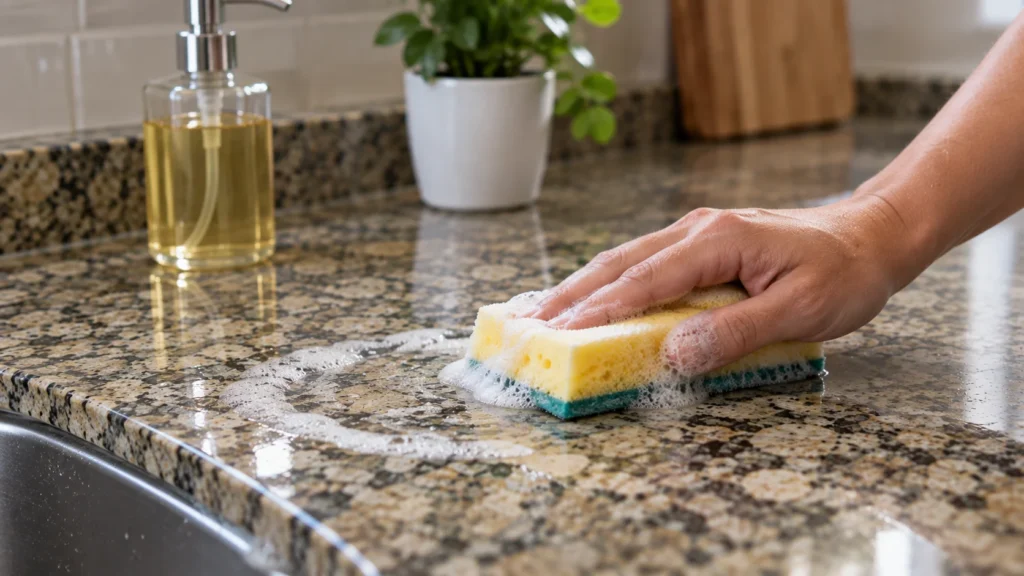
Avoid popular DIY combinations based on vinegar, lemon juice, or other acids. Even though these ingredients are common household cleaners, natural-stone care guidance warns against acidic products.
How to Polish and Shine Granite Countertops
Cleaning and polishing are different processes. Regular cleaning removes dirt and residue, while a granite-specific polish can enhance the appearance of a suitable finished surface. Always select a product designed for granite and follow its instructions.
Do not use abrasive powders or rough pads simply to make granite shine. The Natural Stone Institute warns that abrasive cleaning products can scratch certain stones, while excessive cleaner can leave a film that makes the surface appear dull.
How to Clean Grease and Oil from Granite
Fresh cooking oil should be wiped up promptly with an absorbent cloth before cleaning the remaining residue. Then use warm water with a small amount of mild detergent or a stone-safe cleaner.
For persistent oil discoloration, avoid repeated aggressive scrubbing. Deep oil stains can require a poultice or professional stone treatment, particularly when the granite is porous or the sealer has weakened.
How to Clean Unsealed or Weathered Granite Countertops
Unsealed granite needs additional caution because the stone may absorb liquids more readily. Clean spills promptly and avoid leaving water, oils, wine, coffee, or cleaning products sitting on the surface.

If the countertop is weathered, discolored, etched, or showing persistent absorption, cleaning alone may not restore its original appearance. A stone professional can determine whether the surface needs sealing, honing, polishing, or another restoration procedure.
Common Granite Countertop Cleaning Mistakes
Avoid these mistakes when caring for granite:
- Using vinegar as an everyday granite cleaner.
- Using lemon juice on the countertop.
- Applying abrasive scouring powders.
- Scrubbing with steel wool.
- Leaving spills unattended.
- Allowing water to sit around faucets.
- Using excessive dish soap.
- Failing to rinse cleaning residue.
- Leaving the surface wet after cleaning.
- Using an unsuitable bathroom cleaner.
- Assuming every granite slab needs the same sealer schedule.
- Treating a deep stain like ordinary surface dirt.
- Applying a sealer to a dirty countertop.
- Using an unapproved chemical on food-preparation surfaces.
- Ignoring manufacturer or fabricator instructions.
The Natural Stone Institute specifically advises against acidic products, abrasive powders, and excessive cleaner, and recommends consulting a stone professional when a problem is too difficult to handle with routine care.
Conclusion
The best way to clean granite countertops is to keep the routine simple: remove spills promptly, use warm water with a mild or neutral cleaner, wipe with a soft cloth, rinse away residue, and dry the surface. Regular care helps prevent buildup, streaks, and avoidable staining.
For hard-water deposits, deep stains, unsealed granite, weathered surfaces, sealing, or restoration, avoid aggressive DIY chemicals. Granite is durable, but the correct care depends on the particular stone, finish, porosity, and existing sealer.
What is the best thing to clean granite countertops with?
Warm water with a small amount of mild dishwashing detergent or a pH-neutral stone cleaner is a suitable everyday option. Rinse and dry afterward.
Can I use vinegar to clean granite countertops?
It is better to avoid vinegar. The Natural Stone Institute advises against acidic cleaning products for natural stone because they can damage susceptible surfaces.
How often should granite countertops be cleaned?
Wipe spills and food residue as they occur and clean the countertop regularly. High-use kitchen and bathroom surfaces may need more frequent cleaning.
How do you remove hard-water stains from granite?
Start with a granite-safe, non-acidic cleaner and a soft cloth. Avoid vinegar and abrasive tools. Persistent mineral deposits may require specialized stone-care treatment.
How do you clean and reseal granite countertops?
Clean the surface thoroughly, remove all residue, allow it to dry completely, and apply a suitable penetrating sealer according to the manufacturer’s instructions. Not every granite requires the same sealing frequency.
Can you use baking soda on granite countertops?
Baking soda should not be treated as a universal granite cleaner. For stubborn stains, use a method specifically appropriate for the type of stain and granite finish, and avoid abrasive scrubbing.
How do you make homemade granite cleaner?
A simple option is warm water with a small amount of mild dish soap. Avoid adding vinegar, lemon juice, or other acidic ingredients.
How do you make granite countertops shine?
Clean away residue, rinse thoroughly, and dry with a clean microfiber cloth. If additional polishing is desired, use a granite-specific polish rather than an abrasive household product.