Peanut butter is a delicious food, but its combination of oil, protein, and sticky residue can make spills surprisingly difficult to clean. If peanut butter gets onto a shirt, jeans, carpet, sofa, or another surface, scraping and treating the stain correctly can prevent it from spreading deeper into the material. For washable clothing, the University of Georgia recommends removing excess peanut butter, pre-treating the stain, and laundering according to the fabric’s care instructions.
The key is to deal with the greasy portion first rather than simply soaking the stain in water. This guide explains how to remove peanut butter stains, including peanut butter oil stains from clothes, while also covering carpets and other common surfaces. The exact method should always be adjusted for the material and its manufacturer’s care instructions.
Why Are Peanut Butter Stains So Difficult to Remove?
Peanut butter does not behave like an ordinary water-based food stain. Its oily consistency can spread through textile fibers, while thicker particles can remain attached to the surface. This is why simply wiping the area with water may leave a greasy mark behind.
Fresh peanut butter is usually easier to treat because less oil has had time to penetrate the material. Once the stain has been washed incorrectly or exposed to significant heat, removing the remaining oily residue can become more difficult.
The first step should therefore be physical removal of excess peanut butter. The Carpet and Rug Institute similarly recommends gently scraping semi-solid peanut butter from carpet rather than rubbing it into the fibers.
For clothing, a pre-wash stain remover or suitable detergent can then help break down the remaining residue. UGA specifically lists peanut butter among oil-based food stains and recommends scraping away the excess followed by pre-treatment and laundering.
How to Remove Peanut Butter Stains from Clothes
If peanut butter has landed on a shirt, T-shirt, hoodie, jeans, uniform, or another washable garment, start by carefully removing the excess. Use the edge of a spoon or a dull knife and work gently so you don’t push the peanut butter further into the fibers.
After scraping, apply a suitable pre-wash stain remover or liquid laundry detergent to the affected area. Work according to the product’s instructions and check the garment care label before washing. UGA’s textile guidance specifically recommends pre-treating peanut butter stains with a pre-wash soil and stain remover before laundering.
Avoid automatically using the hottest available water. The appropriate washing temperature depends on the garment, the care label, and the cleaning product. Most importantly, inspect the garment after washing and before drying it with heat. If an oily shadow remains, treat it again rather than immediately applying more heat.
15 Steps for Removing Peanut Butter from Washable Fabric
Use this checklist when dealing with a peanut butter stain on ordinary washable clothing:
- Remove the garment from the heat source if it is near a dryer.
- Scrape off excess peanut butter with a spoon or dull knife.
- Work from the outside of the stain toward the center.
- Avoid rubbing the peanut butter deeper into the fabric.
- Blot remaining surface residue with a clean cloth if necessary.
- Read the garment’s care label before applying a cleaner.
- Apply a suitable pre-wash stain remover.
- Follow the stain-remover manufacturer’s directions.
- Alternatively, use an appropriate liquid laundry detergent.
- Gently work the treatment into the stained area.
- Allow the product to work for the recommended period.
- Launder the garment using its permitted washing instructions.
- Check the stain before putting the garment in a dryer.
- Repeat treatment if a greasy mark is still visible.
- Allow the garment to air-dry when appropriate until you know the stain is gone.
UGA also advises testing cleaning products on an inconspicuous area and following the care label rather than using a treatment that the fabric manufacturer prohibits.
How to Remove Peanut Butter Oil Stains
A peanut butter oil stain can remain after the visible food has been removed. This happens because peanut butter contains oil that can penetrate fibers and leave behind a darker or translucent-looking mark.
Start by removing any solid residue. Then apply a grease-cutting laundry product or an appropriate pre-wash stain remover to the affected area. For washable garments, laundering after pre-treatment is the standard approach recommended by textile-care guidance.
If the stain remains after washing, don’t assume it is permanent after one attempt. Repeat the appropriate treatment while following the garment’s care instructions. Avoid drying the item with heat until you are satisfied that the oil mark has disappeared.
For delicate or valuable garments, particularly materials such as silk, wool, structured clothing, or garments labeled dry clean only, professional cleaning may be safer than experimenting with household products.
How to Remove Peanut Butter Stains from Carpet
Carpet requires a different approach because excessive water or aggressive rubbing can spread the stain and potentially affect the carpet backing. The Carpet and Rug Institute recommends acting quickly, gently scraping semi-solid peanut butter, and testing cleaning solutions in an inconspicuous area before treating the visible stain.
First, carefully lift away as much peanut butter as possible using a rounded spoon or another non-sharp tool. Don’t grind the residue into the carpet fibers.
Next, apply a small amount of an appropriate carpet-cleaning solution to a white cloth, rather than flooding the carpet. Gently work from the outside toward the center and blot. The Carpet and Rug Institute recommends repeating the treatment as long as residue transfers to the cloth and then rinsing with cold water and blotting the area dry.
For expensive, delicate, or heavily stained carpeting, follow the carpet manufacturer’s recommendations or contact a professional cleaner.
How to Remove Peanut Butter from Upholstery and Other Surfaces
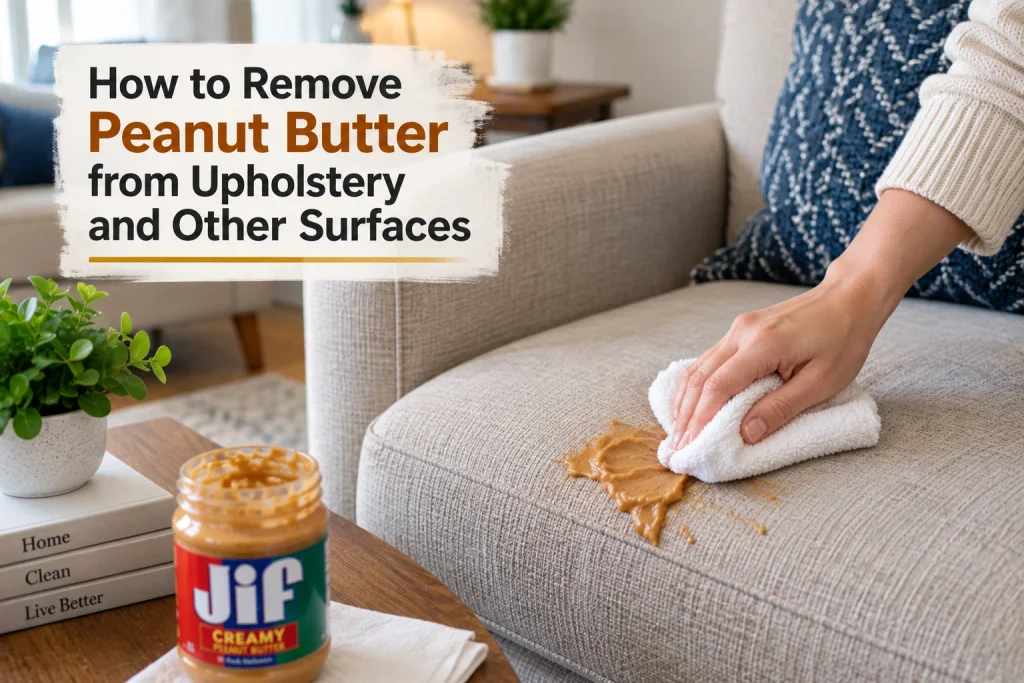
Peanut butter can also land on sofas, chairs, mattresses, tables, floors, walls, and other household surfaces. The safest approach depends heavily on the material. A method suitable for washable fabric should not automatically be used on wood, stone, finished furniture, or upholstery.
For upholstery, remove excess peanut butter without rubbing. Use a compatible upholstery-cleaning method and avoid excessive moisture. UGA warns that overwetting upholstery can cause problems with finishes and padding, so controlled application is important.
For hard surfaces such as some tile, plastic, or finished furniture, UGA recommends removing excess peanut butter and using warm sudsy water with an appropriate cloth or sponge, followed by clean-water rinsing and drying.
Always test a cleaning solution first if the manufacturer’s instructions permit spot testing. This is particularly important for colored upholstery, finished wood, natural stone, and specialty surfaces.
What Mistakes Should You Avoid When Removing Peanut Butter?
Peanut butter stains often become worse because of incorrect first treatment. Rubbing vigorously can push the oily food farther into fabric, while excessive water can spread the stain on carpet or upholstery.
Another common mistake is treating the stain without checking the material. Cleaning instructions for cotton clothing, wool, carpet, upholstery, wood, and stone can be very different. UGA emphasizes reading care labels and pretesting cleaning agents before use.
You should also be cautious with commercial solvents. Some products can be flammable or damaging to particular materials, and UGA recommends adequate ventilation and careful handling when such products are used.
Can Peanut Butter Stains Be Removed After They Dry?
Yes, a dried peanut butter mark may still be treatable, but success depends on the fabric, how long the stain has been present, and whether it has already been exposed to heat. Start by gently removing any hardened residue rather than scraping aggressively.
For washable clothing, apply an appropriate stain treatment and launder according to the care label. If an oily shadow remains, repeat the treatment instead of immediately using a dryer.
For carpets and upholstery, dried stains may require several controlled treatment cycles. The Carpet and Rug Institute notes that complete removal can require repeating the same cleaning step several times.
Conclusion
Learning how to remove peanut butter stains starts with one simple rule: remove the excess before trying to clean the remaining mark. For clothes, scrape away the peanut butter, pre-treat the stain with an appropriate product, and launder according to the garment’s care instructions. For a stubborn peanut butter oil stain, additional treatment may be necessary before drying.
Carpet, upholstery, wood, tile, and other surfaces require material-specific methods. Test cleaning products when appropriate, avoid aggressive rubbing, and don’t use heat or strong chemicals without confirming that they are suitable for the surface. With prompt and careful treatment, many peanut butter stains can be significantly reduced or removed.
How do you remove peanut butter stains from clothes?
Scrape away the excess peanut butter, apply a suitable pre-wash stain remover or detergent, and launder according to the garment’s care label. Check the stain before drying it.
How do you remove peanut butter oil stains?
Remove the solid residue first, then pre-treat the remaining oily area with an appropriate stain-removal product before washing. Repeat the treatment if necessary and avoid heat until the stain is gone.
Does peanut butter permanently stain clothes?
Not necessarily. Prompt treatment can improve the chances of removal, although older or heat-set stains can be more difficult. The fabric type and previous cleaning treatment also affect the result.